The Difference Between Wet Lube and Dry Lube for Bike Chains
Why the right lubricant matters so much
Looking after your bike goes further than cleaning. Lubricating the chain regularly and correctly is essential to limit wear, keep shifting smooth and avoid needless costs. A well-lubricated chain greatly extends the life of your cassette, chainrings and derailleur. The choice of bike chain lube plays a crucial role here. Among chain oils, wet lube and dry lube are the two most common types.
Wet lube and dry lube: the basics explained
The names already say a lot: wet lube is made for wet conditions, while dry lube suits dry weather. However, there is more to it than “rain versus sun”. The difference lies mainly in the composition, the viscosity and the way the lube behaves on the chain while you ride.
What is dry lube?
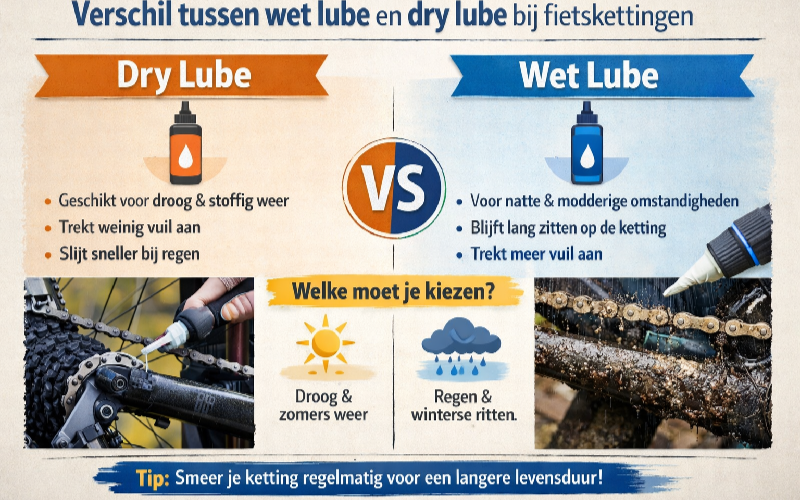
Dry lube is a thin chain oil with a low viscosity. This means the oil easily gets into the chain links and leaves an almost dry protective layer there. As a result, dirt sticks less easily to the chain. That makes dry lube ideal for dry, dusty conditions such as summer road rides, gravel paths or dry mountain bike routes.
A further benefit is that the drivetrain stays relatively clean, which limits wear even more. The downside is that dry lube disappears faster in rain or on wet ground, so you need to reapply it more often.
What is wet lube?
Wet lube is clearly thicker and stays on the chain much better. This type of chain oil is made for bad weather such as rain, mud and wet roads. Because of the high viscosity, the oil hardly washes off, even in long spells of rain or on wet rides.
On the other hand, wet lube attracts more dirt. In dry and dusty conditions, this can cause extra wear. Therefore, people mainly recommend wet lube for autumn and winter rides, or for heavy use on wet mountain bike and gravel routes.
Which bike chain lube should you choose?
If you mainly ride in summer, in dry weather or on dusty ground, dry lube is the best choice. If you ride all year round, including in rain and mud, or use your bike a lot in winter, wet lube clearly gives more protection. Many keen cyclists therefore keep both types of bike chain lube at home and switch depending on the season and conditions.
How often should you lubricate your chain?
A clean chain is essential before you apply chain oil. Old oil and dirt stop new lube from sticking well. After cleaning, apply one drop of oil per link on the inside of the chain and turn the pedals slowly. Then wipe off excess oil with a cloth.
On average, dry lube lasts about 150 kilometres, while wet lube often protects for up to about 250 kilometres. Check regularly how your chain feels and looks; that is always the best guide.
On to the FAQ
After looking at the difference between wet lube and dry lube, some practical questions often remain. Below, we answer the most common ones.
Frequently asked questions about wet lube and dry lube
Which is better for a road bike: wet lube or dry lube?
For a road bike, dry lube is usually the best choice. It attracts little dirt and keeps the drivetrain clean in dry weather. Only in heavy rain or winter use is wet lube a better alternative.
Can I use wet lube in summer?
Yes, you can, but it is not ideal. Wet lube attracts more dust and dirt in dry conditions, which can cause extra wear. So dry lube suits summer rides better.
How do I know when my chain needs lubricating again?
If the chain feels dry, starts to squeak or looks dirty, it is time to lubricate again. Checking regularly prevents needless wear.
Do I need to remove old chain oil first?
Yes, removing old oil and dirt is important. A clean chain helps the new lube stick better and work more effectively.
Is dry lube also suitable for gravel bikes?
Dry lube works well for gravel bikes in dry conditions. For wet or muddy rides, however, wet lube is a better choice because it protects for longer.


