Siemens Detector Picks Up Carbon Bikes at Traffic Lights
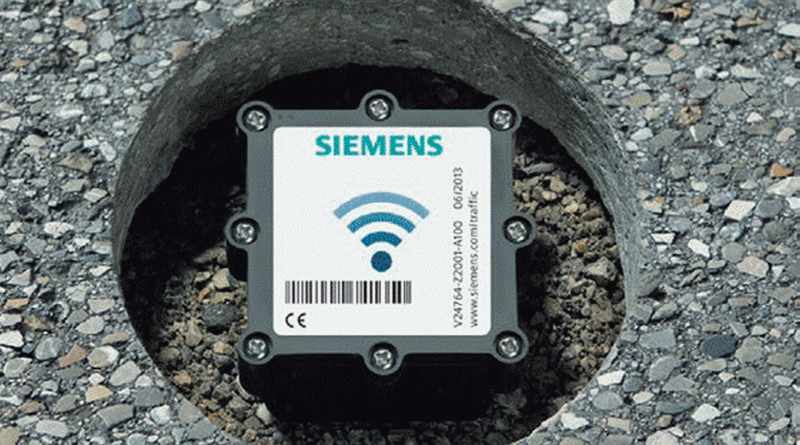
A new problem has appeared in the world of bike detection: carbon bikes. Makers build more and more bike frames from carbon. Traditional detection loops often fail to detect these carbon bikes. This means traffic lights do not automatically turn green when a cyclist with a carbon frame approaches. Besides, the system does not always count cyclists correctly. That affects the accuracy of cycle route analyses. Fortunately, Siemens has developed a solution: the WiMag Cycle Detection detector, which detects bikes using microwave radar technology.
The Problem with Carbon Bikes and Detection Loops
 Traditional detection loops, which workers cut into the road surface, are designed to detect metal objects such as cars and bikes with steel or aluminium frames. When a vehicle or bike rides over these loops, they send a signal. That signal can activate a traffic light or count a vehicle. However, carbon bike frames are not magnetic, so these systems often miss them. As a result, cyclists have to wait needlessly at traffic lights, or traffic analyses show the wrong cycle traffic volume.
Siemens’ Innovative Solution
To tackle this problem, Siemens has developed the WiMag Cycle Detection detector. It uses microwave radar technology. It does not rely on the magnetic properties of bike frames. Instead, this new technology detects the presence of a bike with radio waves. The wireless sensor sits in the road surface and runs on a battery. It sends its measurements to an access point, which then communicates with the traffic light controller.
A key advantage of this new technology is that a bike does not need to ride directly over the sensor. The detector can detect bikes and mopeds from a distance and can even tell the two apart. This raises the accuracy of detection. It also makes it possible to manage traffic lights more efficiently and count cyclists better.
Uses and Benefits of WiMag Cycle Detection
WiMag Cycle Detection technology has been used successfully for several years to detect vehicles. The new version for bike detection has recently come into use in the United Kingdom. Siemens sees a lot of potential for this technology in the Netherlands. Cycling is an important part of the urban mobility network there.
One of the main advantages of this system is that it offers an alternative to traditional detection loops. This is especially so where detection must happen far from the traffic light controller. It is also so where cutting loops would damage the road surface. For example, you can use the system on cycle paths or in busy urban areas. You can also use it where it is important to collect accurate cycling data without damaging the road.
Installing these detectors is relatively simple. Installers fix the sensors in a hole drilled into the road surface with epoxy resin. This means installers can fit the system quickly without major disruption to traffic. In addition, the system is a sustainable solution, because the sensors last for years and need little maintenance.
The Future of Bike Detection
With the introduction of the WiMag Cycle Detection detector, Siemens takes an important step towards better bike detection and traffic management. Being able to detect carbon bikes and other hard-to-detect bike frames opens the door to more accurate and efficient traffic systems. This benefits individual cyclists, who wait less at traffic lights. It also benefits cities that try to manage their traffic flows better and promote sustainable mobility solutions.
The system’s success in the United Kingdom gives hope for wider use. This includes the Netherlands and other countries where cycling plays a prominent role. As cities invest more and more in smart mobility solutions, demand for advanced detection technology will only grow. That includes the WiMag Cycle Detection detector.
Siemens’ development of the WiMag Cycle Detection detector marks an important advance in bike detection. This is especially so as carbon bikes become more and more popular. By using microwave radar technology, this detector offers a reliable alternative to traditional detection loops. Its benefits include simple installation and the ability to detect bikes from a distance. This innovation promises to improve road safety and efficiency in cities. At the same time, it contributes to more accurate analyses of cycling traffic.


