Choosing a Groupset: Light or Durable for Your Drivetrain
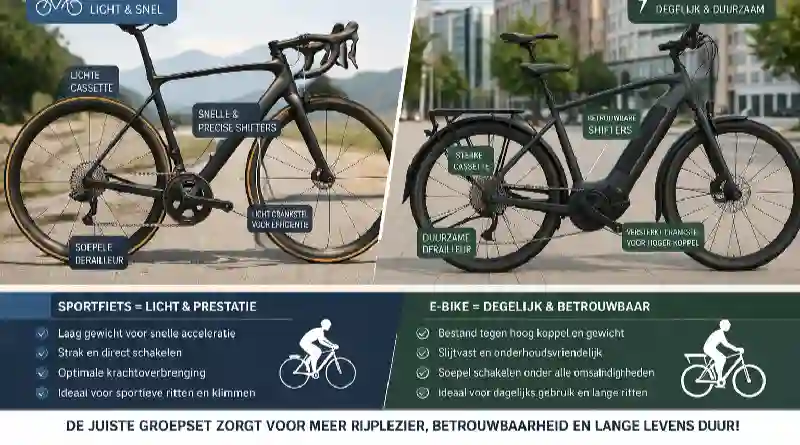
When you buy or build a bike, you often look first at the frame, the motor or the looks. Yet the groupset largely decides how a bike rides, shifts and performs in the long run. This matters most when you compare a sport bike with an e-bike. A light, fast road bike asks something different of the drivetrain than a heavy electric bike that has to handle a lot of torque every day. That is why choosing a groupset is not the same for every bike. Light for the sport bike, durable for the e-bike: every drivetrain deserves its own groupset.
The drivetrain of a bike consists of parts such as the crankset, cassette, chain, derailleurs and shifters. Together they decide how power is transferred and how smoothly you can shift. University sources explain that it is the combination of chainring and cassette that sets the gear ratio, and with it how much force or speed you get from each pedal turn. A low gear makes pedalling easier, while a high gear gives more speed but needs more force.
Why Choosing a Groupset Is Not Universal
Many cyclists think “better” automatically means lighter, more expensive and sportier. In practice, it is more nuanced. A high-end road bike groupset is designed with speed, low weight and direct shifting as its priorities. On an e-bike, the priority shifts to durability, load capacity and control in tougher conditions. That difference makes sense, because people use the two bikes in very different ways.
A sport bike must feel efficient. Every gram you save, every crisp shift and every stiff crank adds to a more direct feel. On a road bike or gravel bike, you notice straight away when parts run lightly and respond fast. It is all about rhythm, cadence and efficiency. The bike should invite you to set the pace and turn power into speed well. For that reason, manufacturers often choose lighter materials and refined finishes here.
On an e-bike, it works differently. The motor adds extra force, which puts more strain on the chain, cassette and sprockets. The load on the drivetrain is therefore structurally higher, especially when accelerating, riding uphill or carrying luggage every day. Ultralight parts made mainly for sporty performance help less then. What counts is whether the groupset can take a lot of torque, lasts long and keeps working predictably in wind and weather.
Choosing a Groupset for the Sport Bike: What Really Matters
On sporty bikes, weight is a serious issue. Not because a few hundred grams change everything, but because the overall balance of the bike matters. A light groupset helps with acceleration, climbing and the general feeling of suppleness. If you ride long distances or like to ride for performance, you notice the difference between a basic and a refined setup.
Crisp Shifting Under Load
On a sport bike, you want to react fast. Shifting up for a sprint, shifting down for a short climb or finding the right gear on a twisting stretch: it has to happen directly and accurately. A sport-oriented groupset is therefore often developed for fast, precise shifts. That gives confidence, especially when you ride at pace and do not want to feel any delay in the drivetrain.
Ergonomics also play a part. Shifters on road bikes or switches on mountain bikes are designed so you can shift intuitively without losing your rhythm. That is not only comfortable but also functional. The smoother the controls, the better you spread your energy over the ride.
Low Mass and Efficient Power Transfer
The physics of the drivetrain makes clear that gear ratio and mechanical advantage together decide whether you climb more easily or gain more speed. On sporty bikes, the aim is often to use your own pedal force as efficiently as possible. A light, stiff and well-matched groupset helps with that.
A road bike usually does not have to pull heavy loads every day, handle dozens of stop-start moments in city traffic or absorb motor assistance. As a result, makers can tune parts more for performance. You see this in narrower components, lighter cassettes and finishes aimed at speed and weight rather than maximum robustness.
Who This Is Relevant For
When choosing a groupset, think about your rides. If you mainly ride sporty tours, training rides, club rides or long leisure distances on asphalt or gravel, you usually gain more from a light and refined groupset than from an extra-heavy drivetrain. This is especially true if you value shifting feel, suppleness and a lively bike. Then a groupset may well be more performance-oriented, as long as it suits your use and maintenance level.
Durable for the E-Bike: Durability Comes First
When choosing a groupset for an e-bike, the emphasis is elsewhere. Here it is less about the last grams and more about parts that keep working well under higher loads. An electric bike has not only a higher total weight but often also stronger acceleration thanks to the assistance. This causes more wear on the drivetrain than many people expect beforehand.
More Torque Needs Stronger Parts
On an ordinary bike, all the drive power comes from the rider’s legs. On an e-bike, the motor helps. As a result, the chain, cassette and chainrings can take a heavier load, especially when the rider pulls away hard in a high assistance mode. In technical terms, a higher load means that parts have less room for error. They must keep performing stably and resist wear. That makes durability more important than pure weight.
For this reason, e-bikes often have heavier chains, stronger cassettes and parts designed specifically for electric assistance. That is not a marketing detail, but a practical choice. An e-bike used every day for commuting, shopping or longer trips has to be reliable. The drivetrain gets less rest and has to deliver peak performance more often at low speed and high torque.
Shifting Comfort and Lifespan
Where sport cyclists value direct response, e-bike riders often look for smooth use over the long term. The bike must still shift predictably after many kilometres, without constant adjustment or quick wear. That is exactly why a more robust groupset suits this segment better.
A durable drivetrain also helps to limit maintenance costs. That does not mean an e-bike is maintenance-free, quite the opposite. But parts that are better matched to the load often last longer in practice than lighter components made for a very different use profile. With intensive daily use in particular, that can make a big financial and practical difference.
For City Rides, Commuting and Transport
The typical e-bike rider rides differently from the typical sport cyclist. There are more starts and stops, more short trips, more varying load and regular extra weight from bags, child seats or a full crate. The road surface is not always ideal either. In such conditions, a sturdy and reliable groupset is a smarter choice than an ultralight performance group.
The Difference Is Not Only in Weight
It is tempting to keep the difference simple: light is sporty, heavy is durable. Yet reality is broader. What matters is the overall match between bike, use and drivetrain. A good groupset is not by definition the lightest or most expensive option, but the version that best suits the purpose of the bike.
A sport bike used mainly for leisure rides does not always need the top range. And an e-bike for occasional use does not immediately need the heaviest drivetrain. The right choice lies in the middle ground between performance, durability, maintenance and budget. If you understand that, you choose smarter and avoid disappointment later.
What to Look for When Choosing a Groupset
1. Do you ride for sport or for function?
If you ride mainly to make speed, gain altitude or finish long rides, a lighter sporty groupset often makes sense. If you use the bike mainly for daily transport, commuting, city rides or relaxed touring with assistance, durability usually beats weight saving.
2. How much load does the drivetrain get?
Think of your weight, luggage, the terrain and whether there is a motor. The higher the structural load, the more important it is that parts can take a knock. That applies even more to e-bikes, trekking bikes and speed pedelecs.
3. How important is ease of maintenance?
Performance-oriented parts can feel fantastic, but sometimes they also need more precise maintenance. If you like tinkering or have regular services done, you can cope with that fine. If you mainly want trouble-free riding, you often prefer a groupset that is a little less refined but robust and forgiving.
4. Look at the whole picture
A groupset never stands alone. Tyres, brakes, wheelset, frame type and riding position all affect how a bike feels. It makes little sense to choose an extremely light groupset on a bike meant for heavy daily use. Conversely, a heavy utility drivetrain on a pure sport bike is often unnecessary.
Choosing a Groupset by Type of Bike
Road Bike
On a road bike, the emphasis is usually on low weight, crisp shifting and efficient power transfer. A sport-oriented groupset that runs smoothly and responds fast suits it here. For keen riders in particular, that brings a noticeable advantage.
Gravel Bike
A gravel bike often sits between sport and all-round use. You still want to ride efficiently, but also count on reliability in dirt, dust and changing conditions. Balance matters here: light enough for sporty riding, durable enough for rougher terrain.
Mountain Bike
In mountain biking, direct control counts, but so does durability under shocks, mud and steep sections. The groupset must be sturdy, shift well and cope with intensive load. Weight stays important, but robustness plays a bigger role than on a pure road bike.
City E-Bike
A city e-bike benefits mainly from wear resistance, predictable shifting and a low risk of faults. People often use this bike daily, and above all it must be reliable. A heavier but durable groupset suits it better than an ultralight solution.
Trekking E-Bike or Electric Cargo Bike
On this type of bike, the load is even greater. Think of longer rides, holidays, luggage or intensive commuting. It needs a groupset really built for continuous use and higher forces in the drivetrain.
The Core: Let the Drivetrain Do the Job It Was Made For
The best choice is usually not the most impressive on paper, but the most logical in practice. A sport bike gets better with a light, responsive groupset that supports performance. An e-bike gets better with a durable drivetrain that can handle torque, weight and daily use. That is exactly why you should not judge a groupset in isolation, but always in relation to the bike.
So a smart buyer does not only look at the number of gears or the name on the derailleur. What matters is the function of the bike. Light for the sport bike, durable for the e-bike: every drivetrain its own groupset. That principle prevents bad buys and makes sure a bike does what it should, kilometre after kilometre.
For more depth on the technical basics of drivetrains and gear ratios, the explainer pages from West Virginia University, UC San Diego and Indiana University are useful. These sources show clearly how drivetrain, gear ratio and shifting are linked.
After looking at choosing a groupset, a few practical questions often remain. Below, we answer the most common ones.
Which groupset is better for an e-bike?
A durable, wear-resistant groupset is usually better for an e-bike. Because of the motor’s extra torque and the higher total weight, the chain, cassette and chainrings take more punishment. For that reason, durability, reliability and stable shifting matter more here than the lowest possible weight.
Is a light groupset always the best choice?
No, a light groupset is not automatically the best choice. On a sport bike, low weight can add a lot to the riding feel and performance, but on an e-bike or everyday bike, robustness is often more important. The best choice depends on load, use and maintenance needs.
Does an e-bike groupset wear faster than one on an ordinary bike?
Yes, in many cases an e-bike groupset wears faster. That is because the motor puts extra force on the drivetrain, especially when accelerating and climbing. Good shifting, timely maintenance and parts suited to e-bike use help extend its life considerably.
What should I look for when choosing a groupset for a sport bike?
Look mainly at weight, shifting precision, ergonomics and the gear ratios that suit your terrain and riding style. For flat fast rides, you want something different from climbing or gravel. So do not choose only on brand or price range, but above all on how and where you ride.
Can I use a sporty groupset on an e-bike?
Sometimes that is technically possible, but it is not always wise. Makers often design a sporty groupset with performance and weight saving as the priority, not long-term load from motor assistance. For intensive e-bike use, a sturdier and more durable drivetrain is usually the better choice.


