DJI Avinox: A Missed Chance in the E-Bike Industry?
The Influence of Component Brands in the Bike Industry
The bike industry stands out from many other sectors because of the huge influence of component brands. In other industries, the end product is central, but in the cycling world, consumers often look for specific parts. Think of drive systems from brands such as Bosch and Shimano. The name of the bike brand itself therefore often comes second.
This situation grew historically. For a long time, the bike industry was highly fragmented, with many regional players and limited scale. Only brands such as Raleigh had a wider international presence. Component makers saw opportunities to operate worldwide earlier and so built a strong brand position. This gave them a head start that is still visible today.
As a result, the market has become heavily dependent on these component brands. Bike brands often have limited influence over the choice and availability of essential parts. This leads to a rigid supply chain, in which the finished bike largely has to meet the specifications of the components used. Innovation and flexibility come under pressure as a result.
Dependence and Limits in the Supply Chain
Dependence on large component suppliers has a direct impact on how bikes are developed and sold. The so-called Bill of Materials (BOM) is often fixed before a bike is actually produced. This leaves little room to make changes during production.
For bike brands, this means they often have to work with what is available, rather than what is ideal. Supply problems, price rises and limited availability of parts can directly affect the end product. It also becomes hard for brands to stand out, since many competitors use the same systems.
For consumers, the result is a market in which bikes often look alike technically. The difference then lies mainly in design, price and marketing, while the core components are identical. This again strengthens the dominance of component brands.
The Arrival of DJI Avinox and Amflow
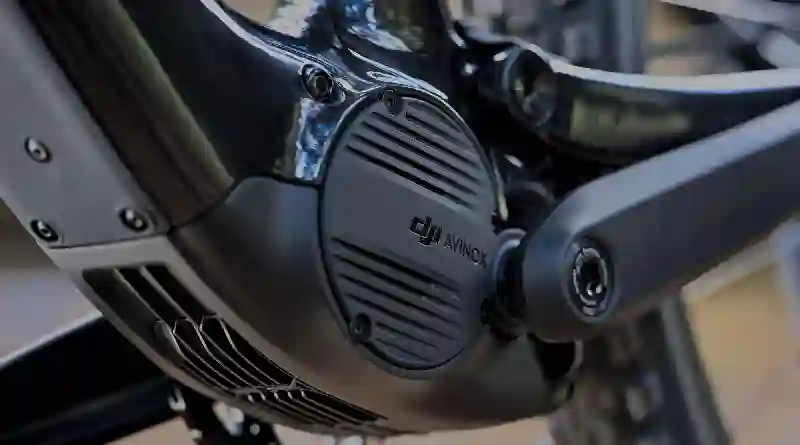
With the launch of the Avinox drive system by DJI, a chance for change seemed to appear. DJI, known worldwide for drones and technology, entered the e-bike market with a powerful and innovative solution. At the same time, the company launched the e-bike brand Amflow as a partner for the launch.
At first, smaller boutique bike brands picked up Avinox. These brands were often looking for alternatives to the established systems and saw DJI as a chance to stand out. By now, more and more brands are making the switch or adding Avinox to their range.
Even so, the impact seems limited for now. Many brands mainly use the system as a supplement, not as a replacement. This means dependence on traditional component suppliers largely stays in place.
The Real Disruption That Never Came
Given DJI’s market position, the company could have followed a much more aggressive strategy. Instead of making the system widely available, DJI could have chosen to build a closed ecosystem. By producing only its own e-bikes with Avinox and distributing them worldwide, the company could have gained full control over both product and supply chain.
This approach would be similar to the strategy DJI has used in the drone market, where it has built a dominant position. Such a move in the e-bike industry would have led to real disruption. Bike brands would depend less on traditional suppliers, and there would be more room for innovation and differentiation.
In addition, DJI would have had full control over the development of the drive system. This is a crucial part of modern e-bikes and plays a big role in a brand’s positioning. By keeping that control, DJI could have set itself apart from both component suppliers and bike brands.
What Does This Mean for the Future of the E-Bike Market?
The arrival of Avinox shows there is a need for alternatives in the e-bike industry. Even so, the market keeps working much the same for now. Component brands keep their strong position and bike brands stay dependent on outside suppliers.
Real change takes more than a new product. It needs a fundamental shift in how the industry is organised. Vertical integration, where one party controls both components and finished products, could play an important role here.
Whether DJI will still go in this direction in future remains uncertain. What is clear is that the arrival of Avinox is a first step towards a possibly different market structure. The question is whether other players will seize this chance.
After looking at DJI Avinox and the e-bike industry, a few practical questions often remain. Below, we answer the most common ones.
Frequently Asked Questions About DJI Avinox
What exactly is DJI Avinox?
DJI Avinox is an innovative e-bike drive system from the technology company DJI. It combines motor, battery and smart electronics in one system. The aim is to offer powerful performance and advanced technology as an alternative to existing systems from well-known brands.
Which brands use DJI Avinox?
Mainly smaller and boutique bike brands use Avinox at the moment. More and more manufacturers add the system to their range, but often as a supplement to existing systems. Big brands are still cautious about a full switch.
Is DJI Avinox better than Bosch or Shimano?
DJI Avinox offers innovative technology and strong performance, but whether it is better depends on the application. Bosch and Shimano have a proven reputation and a worldwide service network, which is decisive for many users.
Why does the e-bike industry depend on component brands?
The industry is historically fragmented, so component makers could scale up and grow internationally faster. This gave them a dominant position, while bike brands often stayed dependent on outside suppliers.
Could DJI really have changed the market?
Yes, with a closed ecosystem and its own e-bike brand, DJI could have made a big impact. By taking full control of product and distribution, the company could have broken the dependence on component brands.


