Cycling Policy in the Party Election Programmes
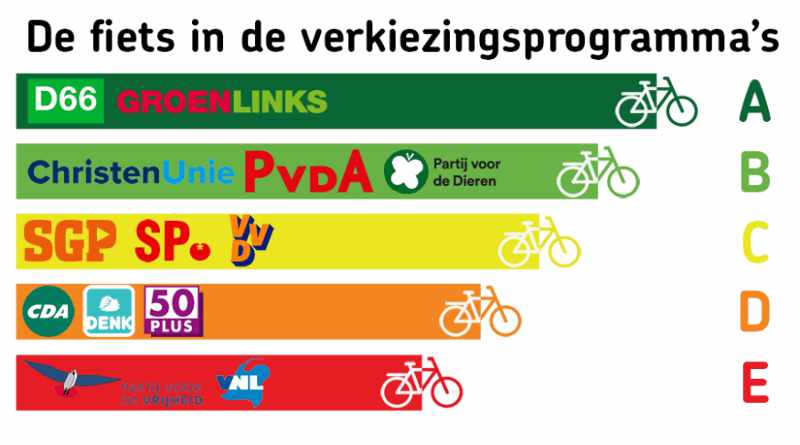
Cycling policy in the party election programmes. A comparison by the Fietsersbond, the Dutch cyclists’ union, shows that D66 and GroenLinks give the bike the most attention in their election programmes. These parties recognise the important benefits of cycling for accessibility, quality of life and health. In addition, they have included clear plans and measures to promote cycling.
The ChristenUnie, the Partij van de Arbeid and the Partij voor de Dieren also score above average. They also stress several benefits of cycling and name measures that should strengthen the position of the bike.
Growing attention for cycling policy
The Fietsersbond has compared the election programmes for years. It finds that more and more political parties pay attention to the bike. According to Saskia Kluit, director of the Fietsersbond, it is positive that the bike appears in almost all political programmes, from left to right. “This is a good development. Now it is important that the parties keep up this attention and turn it into concrete policy,” says Kluit.
Benefits of cycling
The bike offers many benefits, including better accessibility in cities, less traffic congestion and positive effects on health. Cycling is also good for the environment and helps improve air quality. Many political parties recognise these benefits. Therefore, they want to make cycling more accessible and safer by investing in cycle infrastructure.
Planned measures
The parties want to strengthen the position of the bike by investing in better cycle paths, more parking facilities and road safety. There is also attention for encouraging cycling through tax benefits and subsidies. Finally, cycling should become more attractive for commuting and short trips within cities.
The bike as part of mobility policy
Cycling plays a growing role in Dutch mobility policy. As political parties pay more attention to it, the bike is expected to remain an important part of sustainable mobility plans. Also, municipalities and provinces are encouraged to introduce bike-friendly measures and to work with national initiatives.
Conclusion
The bike plays a prominent role in the election programmes of many political parties. As a result, this offers opportunities to improve cycle infrastructure further and to encourage cycling in the Netherlands. The Fietsersbond will keep working for a strong cycling policy. It also hopes that parties will turn their attention to the bike into practice.
For a more detailed article on this subject: Fietsersbond


