Accell Closes the Last Dutch Bike Factory
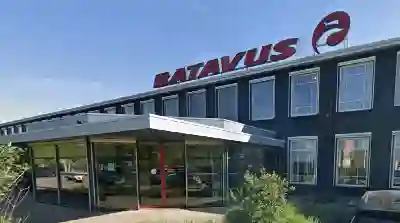
On 26 August 2025, Accell Group announced that production at the last remaining Dutch bike factory, in Heerenveen, will stop for good. This decision marks the end of the Accell bike factory in Heerenveen. The group, owner of well-known brands such as Batavus, Koga, Sparta and Babboe, wants to close the factory at the end of the first quarter of 2026. It will move production to Hungary, supported by an assembly site in Dijon (France). After more than a century, mass production of bikes in the Netherlands will end. About 160 employees will lose their jobs.
What Exactly Is Closing: The Accell Dutch Bike Factory in Heerenveen
| Component | Details | |
|---|---|---|
| Location | Factory in Heerenveen, Friesland | |
| Role of the factory | Produces ~20 % of Accell’s total bike production | |
| Number of jobs | About 160 production workers will lose their jobs | |
| Timeline | Production will be phased out from Sept 2025; closure is expected at the end of Q1 2026 | |
| New production sites | Hungary (factory), supported by Dijon (assembly) | |
| Future activities in Heerenveen | Strategic centre for design, engineering and support functions; ~100 employees will move to a new office in Heerenveen |
History of the Factory
Accell’s roots lie in Heerenveen. Batavus, later part of Accell, began in 1904 as a shop selling clocks and sewing machines. From 1906, the first bikes of the German brand Presto appeared in the window batavus.nl. As demand for bikes grew in the 1950s, Batavus built a new factory on the Canadameer. On 19 September 1956 Batavus officially opened this factory, then home to the most modern machinery in the world, with 350 employees batavus.nl. Since then, millions of bikes from Heerenveen have been sold all over the world.
Why Is Production Stopping?
Financial Trouble and Overcapacity
During the coronavirus pandemic, demand for bikes soared. Manufacturers placed extra orders, but global logistics problems made it hard to get parts. After the pandemic, the market stabilised. Manufacturers such as Accell were left with large stocks of unsold bikes. This stock costs a lot of money, because suppliers have already been paid while the bikes are not yet sold. In 2024, the group therefore had to agree a deal with banks and shareholders to write off part of its debts. It also received €235 million in new credit.
Accell has since cut its stock considerably, partly by reducing the number of warehouses from 85 to 28, with plans to go down to five. The company calls moving production a necessary step to simplify operations and improve efficiency and flexibility.
Reorganisations and Cost Cutting
As early as January 2024, Accell carried out a major reorganisation in which it merged two production sites. This removed 100 to 150 jobs. The unions already warned at the time that moving to Hungary and Turkey could end in a full closure.
In 2024, the company also faced serious problems with Babboe cargo bikes. Frames of these cargo bikes turned out to break, and management first tried to cover up the problems. In the end, Accell recalled tens of thousands of cargo bikes, which cost it an estimated more than €125 million (about €50 million in repair costs and €75 million in lost revenue).
Besides the cost of the recall, high wage costs in the Netherlands also play a part. Production in Hungary is much cheaper. That is why Accell decided in 2024 to move standard bikes to Hungary already, which cost 100-150 jobs at the time.
Reactions From Unions and Staff
The FNV union reacted with shock to the news and called the closure of the factory “dramatic”. Union official Masja Zwart said that in 2022 Accell had still promised to keep production in the Netherlands. Now it is breaking that promise. The union calls the closure a blow to regional employment and stresses that the Netherlands will soon have no Dutch-built Batavus bikes any more. The CNV union also calls it “very sad” that such an iconic product is disappearing from the Netherlands.
The Future in Heerenveen
Although production is stopping, Accell stays in Heerenveen. It will turn the site into a strategic centre for design, engineering and support functions. Our sources report that about 100 employees, mainly engineers and office staff, will move to a new office in Heerenveen. This choice should keep expertise in bike development in the Netherlands and boost innovation within Accell.
The Wider Impact of Closing the Dutch Bike Factory in Heerenveen
The closure of the factory in Heerenveen marks the end of a long era of Dutch bike production. From 1904, Batavus (and later Accell) built its reputation on craftsmanship and innovative bikes batavus.nl. By moving mass production to Hungary, Accell removes a piece of manufacturing from the Netherlands. At the same time, the decision illustrates the changed reality for bike makers: international competition, volatile demand and high costs force consolidation and cost savings.
For the workers in Heerenveen, the consequences are far-reaching. Besides the 160 permanent employees, about forty people who were seconded through the social employment provider Caparis are also expected to lose their workplace. Accell says it will draw up a social plan, and the FNV points out that a social plan from 2024 must apply for three years.
A Bitter Pill for the Accell Dutch Bike Factory in Heerenveen (Farewell).
With the closure of the last big bike factory in Heerenveen, a historic pillar of the Dutch bike industry disappears. Accell hopes to cut costs and raise efficiency by moving to Hungary and France. A knowledge centre for design and engineering stays in Heerenveen. For the workers, and for fans of quintessentially Dutch bikes, however, it is a bitter farewell. The coming months will be about winding down production, supporting staff and shaping the new strategic centre. It is meant to keep the expertise of Dutch bike building alive.


