E-Bike Brakes Explained: Safety Above All
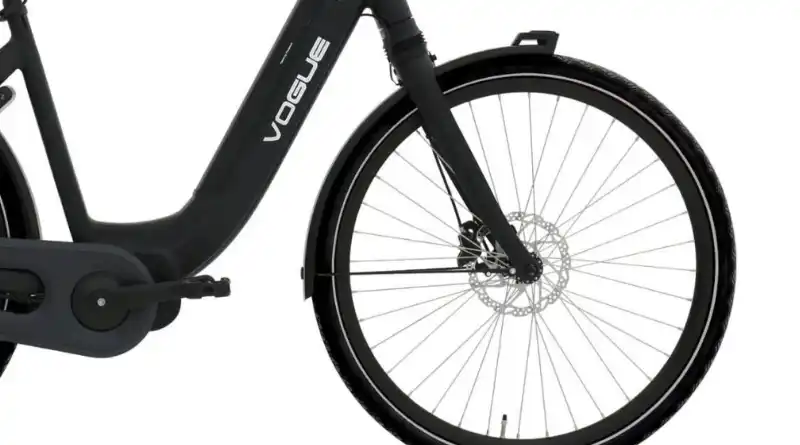
Electric bikes are hugely popular. Because of pedal assistance, you reach higher speeds with ease. But how do you make sure you come to a safe stop? The right e-bike brakes are essential for a safe, comfortable ride. Therefore, this article looks at the different braking systems for e-bikes and helps you make the best choice.
Hydraulic Disc Brakes: The Best E-Bike Brakes for Stopping Power
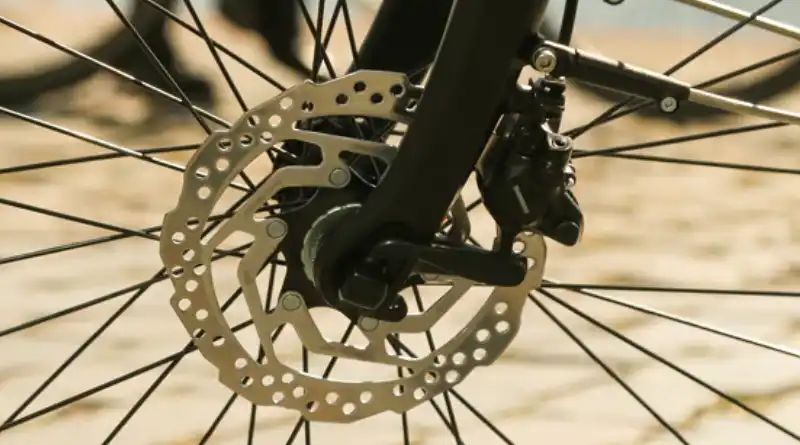 First, hydraulic disc brakes give the best braking performance. This system uses a brake disc on the wheel and hydraulic fluid pumped through the brake line. As a result, you need less force and the braking power stays consistent in any weather.
Advantages:
- Excellent braking power, even in wet weather
- No wear on the rim
- Stays cool on long descents
Disadvantages:
- More expensive than other braking systems
- More complex maintenance and repair
Hydraulic Rim Brakes: Precise and Powerful
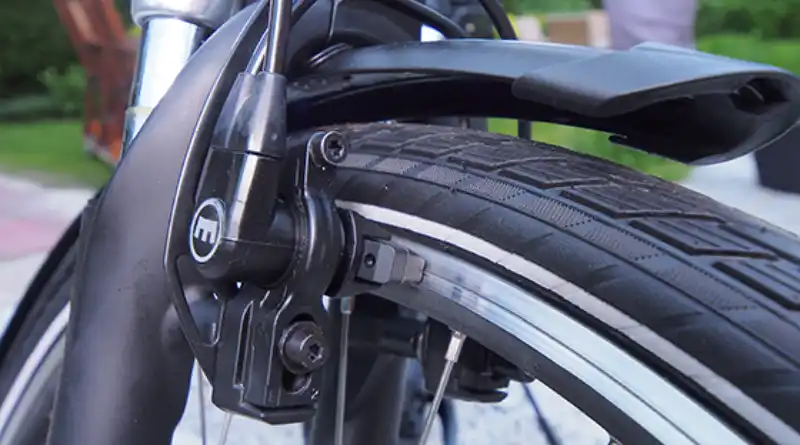 With a hydraulic rim brake, an oil line presses the brake pads against the rim. So this system brakes precisely and powerfully without much effort.
Advantages:
- Easy to control the braking power
- Little force needed to brake hard
- Brake pads are easy to replace
Disadvantages:
- Less effective braking in wet weather
- Wear on the rim and brake pads
V-Brakes: Simple and Affordable
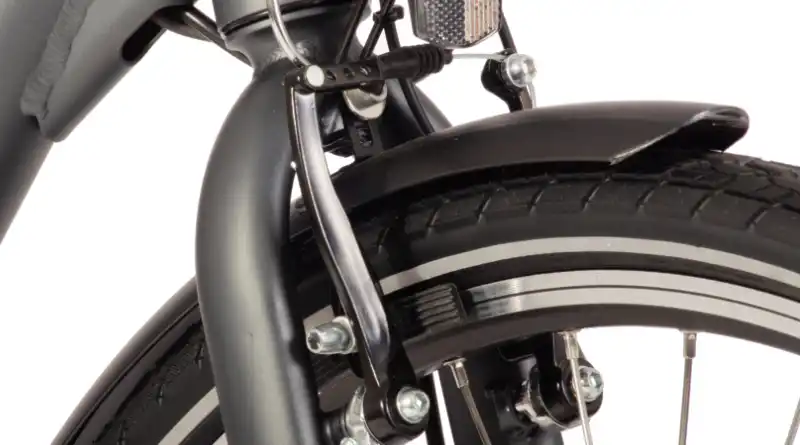 V-brakes, a popular rim brake, work by pressing brake pads against the rim. This system is affordable and easy to maintain, but less suitable for wet conditions.
Advantages:
- Affordable and easy to adjust
- Compatible with wide tyres and mudguards
- Simple to fit
Disadvantages:
- Less braking power in wet weather
- Brake pads wear quickly and need regular replacement
Roller Brakes: Low-Maintenance and Reliable
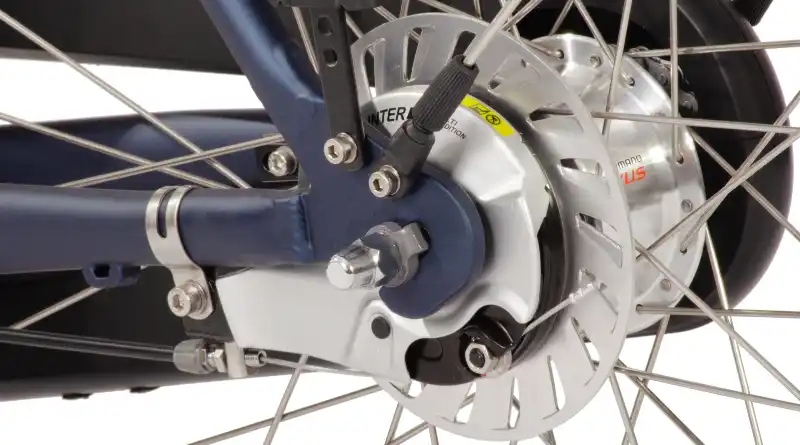 Roller brakes are drum brakes in which small rollers press against a brake shoe. This system needs little maintenance and is reliable, but less suitable for long descents.
Advantages:
- Little maintenance needed
- Good braking in wet weather
- Fitted with a power modulator to stop too abrupt braking
Disadvantages:
- Not suitable for extreme descents
- A faulty roller brake must be replaced completely
Combining Different Braking Systems
Some e-bikes combine different types of brakes. As a result, this gives an optimal balance between braking power, ease of maintenance and weather resistance. For example, a hydraulic disc brake at the front and a roller brake at the back give you both strong braking and easy maintenance.
How to Choose the Right E-Bike Brakes
The right braking system depends on how and where you ride:
- Commuting every day? So choose low-maintenance brakes such as roller brakes.
- Do you ride a lot in the rain? Hydraulic disc brakes give the best grip in wet conditions.
- Want a budget option? Then V-brakes are a budget-friendly choice.
- Looking for precise braking control? Hydraulic rim brakes also give accurate control.
Want to feel the brakes for yourself? Then visit a bike shop for a test ride and see which system suits you best!


