The Latest E-Bike Technology of 2026 Explained
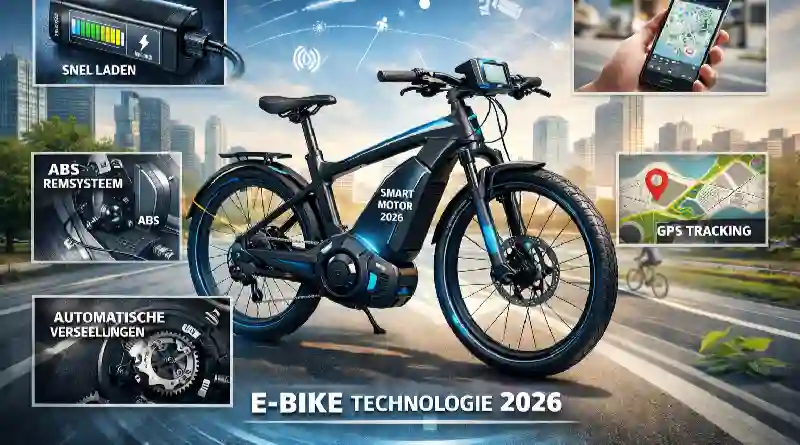
E-bike technology keeps developing at breakneck speed. Manufacturers invest heavily in innovation to make e-bikes smarter, more efficient and more comfortable. In 2026, we see major progress in batteries, motors, connectivity and safety systems. These advances make e-bikes ever more attractive for both daily commuting and leisure rides.
Smarter and More Powerful E-Bike Motors
One of the most important parts of an e-bike is the motor. In 2026, mid-drive motors are getting smarter and more efficient. Manufacturers such as Bosch, Shimano and Brose develop motors that respond automatically to pedal force, speed and terrain.
Thanks to advanced sensors, these systems constantly measure how hard you pedal and how much assistance you need. As a result, the assistance feels more natural and the bike uses energy more efficiently.
Motors are also becoming more compact and quieter. As a result, modern e-bikes are lighter and nicer to ride. This matters most for sporty e-bikes, trekking bikes and speed pedelecs.
A New Generation of E-Bike Batteries
The battery is a crucial part of every electric bike. In 2026, there is a clear trend towards more powerful and lighter batteries.
For example, many manufacturers now use batteries with a capacity of 750 Wh or more. As a result, cyclists can ride 120 to 180 km, depending on the assistance mode and the terrain.
In addition, more and more fast-charging systems are appearing. Some batteries can charge to more than 80 per cent in two to three hours. Advanced battery management systems also extend battery life.
Another development is building the battery into the frame. This makes e-bikes look more and more like ordinary bikes.
Smart Connectivity and Apps
Modern e-bike technology increasingly links bikes to smartphones. With special apps, cyclists can manage their e-bike, plan routes and analyse data.
New features that appear more and more in 2026 include:
- GPS tracking and theft protection
- Navigation on the display on the handlebars
- Automatic software updates
- Analysis of pedal force, speed and battery use
Besides, some systems can even predict maintenance. For example, when the chain or brakes show wear, the user gets a message in the app.
Automatic Gears
A striking development is the rise of automatic shifting systems for e-bikes. These systems change gear automatically based on speed and pedalling cadence.
Therefore, cyclists have to think less about shifting and always ride in the best gear. In city traffic and stop-and-go situations in particular, this brings a lot of comfort.
Besides, manufacturers often combine automatic gears with a belt drive. This makes the bike quieter, easier to maintain and more sustainable.
Improved Safety Systems
Also, safety plays an ever bigger role in e-bike development. New models have advanced braking systems and smart lighting.
One example is ABS for e-bikes, which stops the front wheel locking when you brake hard. This keeps the bike more stable and lowers the risk of a fall.
In addition, more e-bikes now have built-in lighting that switches on automatically in low light. Some models even have indicators and brake lights.
Anti-theft technology is also getting more advanced, with digital locks, GPS tracking and alarm systems.
Sustainable Materials and Production
Besides technical innovations, sustainability is becoming more important in the bike industry. Manufacturers use recyclable materials and energy-efficient production processes more often.
People are also working on batteries that are easier to recycle. This should cut the environmental impact of electric bikes even further.
Because of these developments, the e-bike is not only smarter and more powerful, but also more sustainable.
The Future of E-Bike Technology in 2026
E-bike technology is far from standing still. Experts also expect electric bikes to get even more intelligent in the coming years.
Think of:
- self-learning assistance systems
- even lighter batteries with a longer range
- integration with smart city infrastructure
- advanced navigation and safety systems
As a result, e-bikes will play an ever bigger role in sustainable mobility and urban transport.
After looking at the latest e-bike technology of 2026, a few practical questions often remain. Below, we answer the most common ones.
Frequently Asked Questions About the Latest E-Bike Technology of 2026
What is the biggest e-bike innovation in 2026?
The biggest innovation is the combination of smart motors, more powerful batteries and digital connectivity. Modern e-bikes use sensors and software to adjust the assistance automatically to the rider’s style. This makes cycling feel more natural and uses energy more efficiently.
How far can you ride on a modern e-bike battery?
The range of an e-bike depends on the battery capacity, the terrain and the assistance mode. In 2026, many e-bikes have batteries of 600 to 750 Wh. With these, cyclists can ride between 80 and 180 km on one charge on average.
Do e-bikes have ABS brakes these days?
Yes, more and more e-bikes come with ABS. This technology stops the front wheel locking when you brake hard. This keeps the bike more stable and lowers the risk of a fall, especially on wet or slippery roads.
Can you link an e-bike to your smartphone?
Many modern e-bikes can also link to a smartphone through an app. With it, you can plan routes, check the battery status, switch on GPS tracking or install software updates. Some apps also give maintenance advice.
Are e-bikes becoming more sustainable?
Yes, sustainability plays a bigger and bigger role in e-bike development. Manufacturers use recyclable materials more often and develop batteries that are easier to recycle. Production processes are also getting more energy-efficient.


