Flemish Cycle Highways Get a Shared Logo and Signage
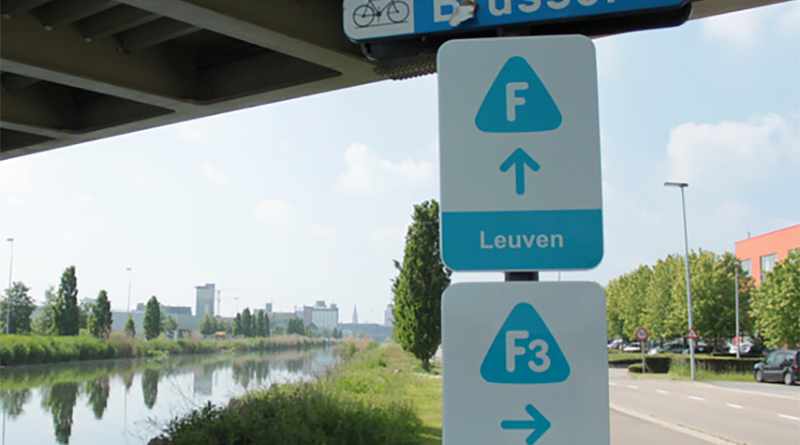
The five Flemish provinces have jointly developed a logo and uniform signage for the Flemish cycle highways (fietsostrades). The aim is to make the 110 routes, covering 2,400 km, easier to recognise. Antwerp, Limburg, Flemish Brabant, East Flanders and West Flanders are all investing heavily in this network of cycle highways.
A Uniform Look for Flemish Cycle Highways
Ideally, a cycle highway runs along a separate cycle track or a towpath. If space is tight, the route follows a cycle path, a cycle street or a quiet road. Because of these different types of infrastructure, the route is not always easy to follow. Therefore, the five provinces developed a “route language” that makes the cycle highways recognisable.
The route language consists of a logo, a route marker, signage and a unique number for each cycle highway. These elements should help cyclists find their way easily. As a result, the routes become clearer.
Test Phases in Flemish Brabant and Antwerp
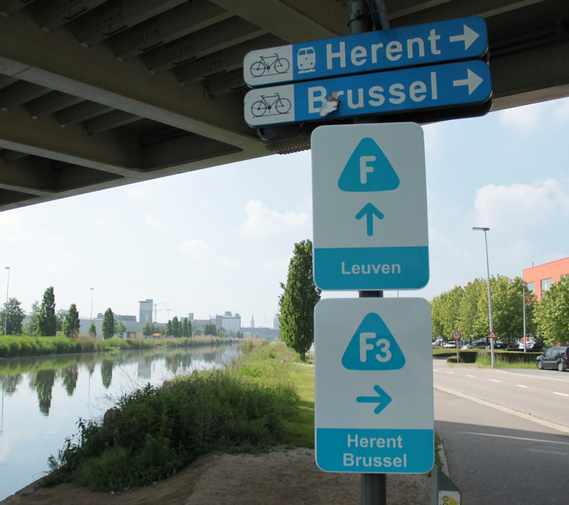 Flemish Brabant is testing the logo and signage on the Leuven-Brussels cycle highway. Meanwhile, Antwerp has set up a trial route on the Antwerp-Essen cycle highway. The tests will show how well the new signage works. The provinces can then make improvements before they roll out the route language to all cycle highways in Flanders.
Developed with Stefan Schöning
The five provinces developed the logo and signage together with designer Stefan Schöning. His expertise helped create a clear, recognisable design that is easy for cyclists to follow. The logo and signage should not only make the cycle highways recognisable. They should also make the routes attractive and inviting.
Unique Numbering
Every cycle highway has a unique code: the letter F plus a number. For example, the Leuven-Brussels route is F3 and the Antwerp-Essen route is F14. This numbering is similar to the one for motorways and crosses provincial borders. It gives cyclists more clarity. It is also handy for route planners and emergency services. The numbers make it easy to plan a route and navigate, both for daily trips and for leisure rides.
Benefits of the New Route Language
The new route language offers several benefits for cyclists. First, it creates one uniform system across Flanders. This makes the routes easier to recognise and follow, whichever province you are in. In addition, it gives the cycle highways a professional look, which appeals to local cyclists and tourists alike.
Another important benefit is better safety. With clear signage and recognisable routes, you are less likely to get lost or take a wrong turn. This makes cycling safer and more pleasant for everyone.
Future Extensions
Over the course of the year, more cycle highways will get the new route language. So cyclists across Flanders can benefit from better signage and recognition. The uniform approach also integrates the cycle highways better into the wider mobility network. This may help more people to cycle in the region.
The provinces will keep working together to expand and improve the network. This includes not only the infrastructure, but also extra facilities such as bike parking, charging points for e-bikes and rest areas along the routes.
The introduction of a uniform route language is an important step for cycling infrastructure in Flanders. With a recognisable logo, clear signage and a unique numbering system, the Flemish cycle highways become more accessible and attractive for all users. This initiative also adds to cyclists’ safety and comfort, and it supports further growth in cycling in the region.


