German Bike Market Stabilises as E-Bike Sales Hit 2 Million
The German bike market stabilised in 2025, with e-bike sales stuck at around 2 million units. This suggests that the market is recovering from the swings of the pandemic years. According to figures from the German industry body Zweirad‑Industrie‑Verband (ZIV), electric bike sales have stayed at a similar level since 2023.
Sales of mechanical bikes have also stayed fairly stable over the past three years, at around 1.8 to 2 million units a year. According to analysts, further growth in the sector should mainly come from a higher average selling price. That did not happen in 2025, however, because many manufacturers and retailers still face high stock levels and price pressure from discounts.
At a joint presentation of the market figures by ZIV, Verbund Service und Fahrrad and Zukunft Fahrrad, speakers stressed that new business models, such as bike leasing and refurbishment, are becoming more important for the future of the sector.
“Despite a challenging economic environment, the sector has held up well and the market is stabilising at a healthy level,” said Burkhard Stork, CEO of ZIV. In his view, the bike industry has once again shown resilience, despite economic uncertainty and changes in consumer behaviour.
E-Bike Market Share
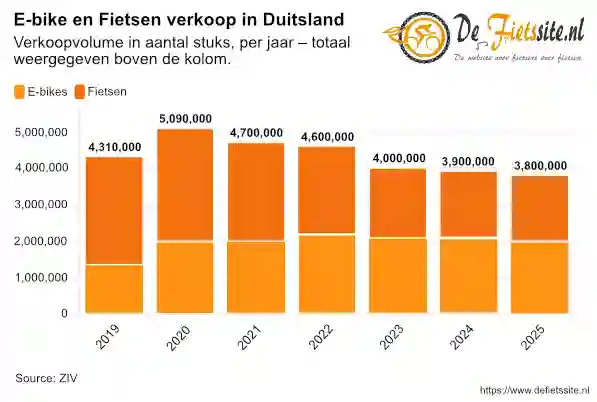
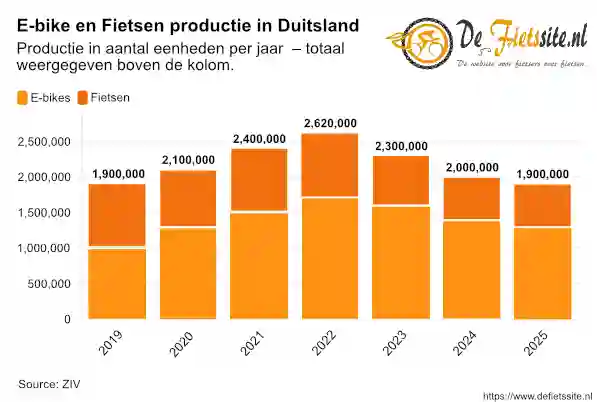
In 2025, production of ordinary bikes rose by 3% to 658,000 units, while production of e-bikes fell by 3% to 1,285,000 units. Total retail turnover of bikes and e-bikes together came to €5.85 billion, a drop of 7.7% on the year before.
Even so, that is a slight improvement on 2024, when the market still shrank by over 10%. Total market volume fell in 2025 by 3.9% to about 3.8 million bikes.
With a market share of 52.7%, e-bike sales came to about 2 million units. For the first time, electric bikes thus stay clearly above half of the market. Sales of traditional bikes came to about 1.8 million units.
Some watchers of the German bike market see it as disappointing that the e-bike market share is now stuck at around 50%. Earlier forecasts often expected electric bikes to eventually reach 60% or even 70% of the total market.
Bosch eBike Systems in particular spoke in earlier analyses about a strongly growing share of e-bikes in the future. It now turns out that growth continues, but more slowly than first thought.
Stock Has Fallen, but Is Still Too High
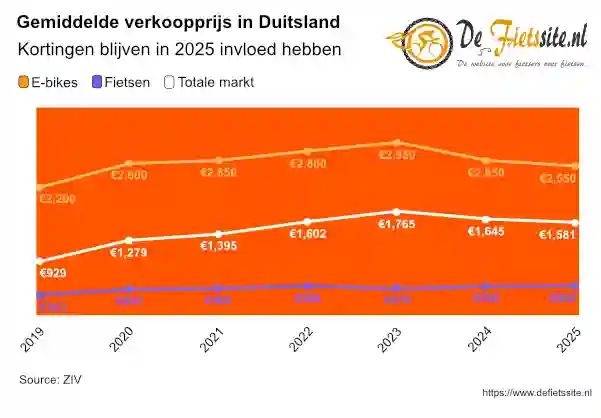
ZIV’s figures show that the average selling price of e-bikes fell slightly, while the price of mechanical bikes stayed about stable. Big discount campaigns remain an important factor that puts pressure on the sector’s turnover.
At the same time, the continued strong demand for road bikes and gravel bikes gives the market some stability. Sporty bikes in particular stay popular with consumers in the German bike market, despite the economic uncertainty.
One important problem remains the high stock level at both manufacturers and retailers. During the pandemic, manufacturers produced a lot to meet demand, after which the market became temporarily saturated.
ZIV expects stock to be back at a normal level by the end of 2026. Even so, caution is needed, because similar forecasts in earlier years did not always come true.
On exports, German bike makers did perform strongly, which helped the German bike market overall. E-bike exports rose by 12%, while exports of ordinary bikes grew by 10%. In total, export volumes came to 1.39 million bikes, similar to the 2023 level.
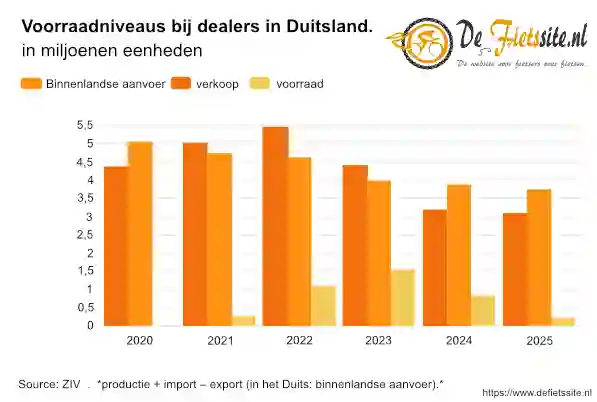
According to Burkhard Stork, the figures show that the bike sector is stabilising: “The 2025 results show that the bike industry is developing at a stable level. Strikingly, demand for bikes seems less sensitive to economic swings than people often think.”
In addition, the make-up of the market is shifting slightly. The share of mechanical bikes is even showing a small rise again.
Leasing and Refurbishment Offer Growth Potential for the Future
Besides the traditional sales channels, bike leasing and refurbished bikes are becoming more and more important for the future of the industry.
An annual study by Deloitte and Zukunft Fahrrad shows that total turnover in the company bike leasing segment fell slightly for the second year in a row. In 2025, it came to about €2.8 billion.
The number of newly leased company bikes fell by 5% to about 720,000 units. Even so, the total lease fleet kept growing thanks to strong results in earlier years. About 2.2 million bikes now ride in Germany through company lease programmes.
Meanwhile, bike leasing keeps getting more popular. The share of employees taking part in a lease programme rose from 8% in 2024 to 11% in 2025. More and more employers also offer the scheme as a secondary employment benefit. More than 340,000 companies now do this in Germany.
Another growing market is refurbishment of bikes that come back from lease programmes. Professionals do up these bikes and sell them again. According to the Deloitte study, the number of refurbished bikes sold has risen by about 192% since 2023.
Because acceptance is growing across different income groups and the market is becoming more international, researchers see very positive prospects for this segment.
After looking at the German bike market and the development of e-bike sales, a few practical questions often remain. Below, we answer the most common ones.
Frequently Asked Questions About the German Bike Market in 2025
How big is the e-bike market in Germany?
The e-bike market in Germany is around 2 million bikes sold a year. Electric bikes now have a market share of more than 50% of all bikes sold. This makes Germany one of the biggest e-bike markets in Europe.
Why is the average price of e-bikes falling?
The average price of e-bikes is falling mainly because of discounts and high stock at manufacturers and retailers. Many companies still produce on the basis of the high demand of the pandemic years, which puts extra pressure on prices to reduce stock.
What is bike leasing and why is it growing so fast?
With bike leasing, an employer makes a bike available to employees through a lease scheme. Employees often pay for the bike out of their salary. The system is popular because it offers tax benefits and encourages sustainable mobility.
What are refurbished bikes?
Refurbished bikes are used bikes that professionals have checked, repaired and resold. They are often lease bikes that are done up after a contract ends and put back on the market.


