GPS Tracking and Theft Protection for Bikes
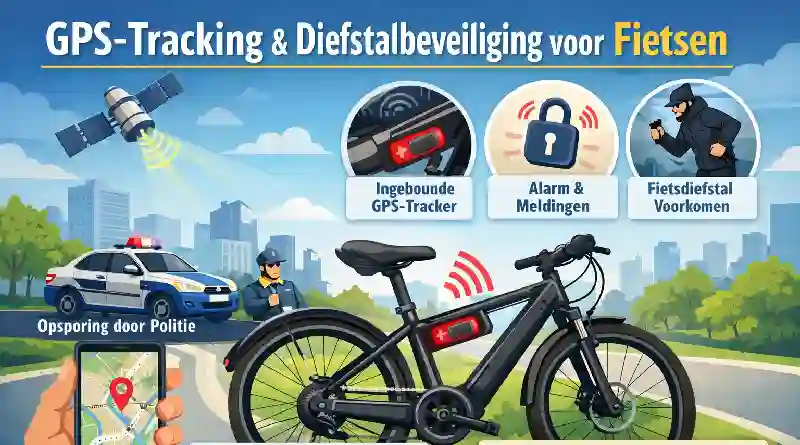
What Is GPS Tracking and Theft Protection for Bikes?
GPS tracking and theft protection for bikes are getting more popular among cyclists. With a GPS tracker, you can follow the exact location of a bike. This not only helps you recover a stolen bike but can also work as a deterrent, because thieves know they can trace the bike.
More and more modern bikes, and e-bikes in particular, come with smart technology designed to prevent theft. Think of built-in GPS modules, motion sensors, alarm systems and apps that show the bike’s location on a smartphone. This gives owners more control over the security of their bike.
Bike theft remains a big problem in the Netherlands. Tens of thousands of bikes disappear every year, often at stations, in city centres or at schools. GPS tracking can raise the chance of recovering a stolen bike, because the app can pass the exact location to the owner or even to the police.
Besides tracing stolen bikes, GPS technology offers more benefits. For example, some systems record ride data, routes and speed. As a result, a GPS tracker becomes not only a security device but also a tool for tracking and analysing rides.
Owners use GPS protection more and more on more expensive bikes such as electric bikes, cargo bikes and road bikes. These bikes are worth more, so they are attractive to thieves. With GPS tracking, an owner can act faster if someone suddenly moves the bike.
How Does GPS Tracking Work on a Bike?
A GPS tracker in a bike connects to satellites to work out the exact location. It then sends this information over a mobile connection to an app or online platform, where the owner can see the location.
Most systems use a small module that sits in the frame, under the saddle or in the handlebars. Some manufacturers build the tracker straight into the bike, so thieves can hardly see it.
When someone moves the bike while it is locked, the tracker can send a message to the owner’s smartphone automatically. Systems often combine this with a motion sensor or alarm.
Another benefit is that the system can store the location history. This lets you look back at routes or see where a bike has been.
Types of GPS Theft Protection for Bikes
There are several types of GPS security systems for bikes. The choice often depends on the type of bike, the price and the features you want.
Built-in GPS Systems
More and more manufacturers build GPS tracking straight into their bikes. Premium e-bikes in particular come with this technology as standard. The system often links to an app and can send alerts when it senses suspicious movement.
External GPS Trackers
Another option is a separate GPS tracker that you fit on or in the bike. You can hide these trackers in the frame, in a bottle cage or under the saddle.
The advantage is that you can fit almost any bike with one, including older models.
Smart Bike Locks With GPS
Some modern bike locks combine GPS tracking with an alarm system. When someone tries to force the lock, an alarm sounds and the owner gets a message through an app.
These systems give both physical and digital protection.
Benefits of GPS Theft Protection
GPS protection offers several benefits for cyclists.
First, it raises the chance of recovering a stolen bike. When you know the location, you can act faster and call in the police if needed.
Also, GPS tracking often works as a deterrent. Thieves prefer a bike without tracking because it is harder to trace.
A GPS system can also help you record ride data, such as distance and speed. This makes the system interesting for sporty cyclists who want to follow their performance.
Finally, GPS protection can give extra peace of mind on expensive bikes such as e-bikes or cargo bikes. A tracker can cost far less than the value of the bike.
What to Look for in GPS Tracking for Bikes
When you choose a GPS tracker, there are several factors to consider.
Battery life is important. Some trackers run for months without charging, while others need regular charging.
You may also need a subscription for the mobile connection that sends the location data. You often need this subscription for real-time tracking.
It is also wise to look at how the system is installed. An invisible tracker makes it harder for thieves to remove it.
Finally, check whether the tracker works with a smartphone app and whether it offers extra features such as alarms or route history.
After looking at GPS tracking and theft protection, a few practical questions often remain. Below, we answer the most common ones.
Frequently Asked Questions About GPS Tracking and Theft Protection
How does a GPS tracker work on a bike?
A GPS tracker finds the location of the bike through satellites and sends this data to an app on your smartphone. This lets you see where your bike is at any time. Some systems also send a message automatically when the bike is moved.
Can you really recover a stolen bike with GPS?
Yes, in many cases a GPS tracker can help you recover a stolen bike. The app keeps updating the bike’s location. With this information, you can call in the police to trace the bike.
Does GPS tracking work without a subscription?
Some GPS trackers work without a subscription, but many systems need a mobile connection to send location data. They usually charge a small monthly fee for the data connection.
Where do you put a GPS tracker on a bike?
You can fit a GPS tracker in several places, such as in the frame, under the saddle or in the handlebars. The better you hide the tracker, the smaller the chance that a thief finds and removes it.
Is GPS-protection enough to prevent bike theft?
GPS tracking mainly helps you recover a stolen bike, but it does not always prevent theft completely. It is therefore wise to combine GPS with a good bike lock and secure parking places.


