Will the Local Bike Shop Survive the Online Boom?
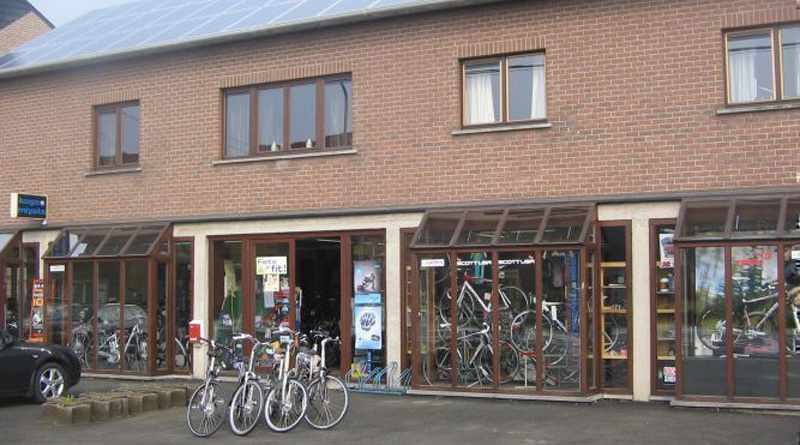
 Will the local bike shop still be there in ten years?
With the rise of online bike shops, local shopkeepers in many places in the Netherlands find it harder and harder to get by.
The local bike shop is no exception.
You would think that consumers want to know what product they are buying and whether it suits them.
This is especially true when buying a bike. Is the bike big enough, is the riding position comfortable, and how does the bike handle on every surface?
And yet more and more bikes are bought through web shops such as fietsenwinkel.nl, stella.nl or matrabike.nl.
That makes sense, because many of these web shops sell the same bikes as the local bike shops.
Often they are even cheaper than the local bike shop.
They buy in bulk from many well-known bike makers, so they can negotiate big discounts. Many small bike shops cannot get those discounts.
Big bike makers are happy to go along with this. The more bikes they sell, the better.
They also make their bike models in large numbers.
The faster they can ship those bikes to the shop, the better.
Now the question is: will this cause problems?
 Bike shops already often get customers who look around for a new bike, take a test ride and, of course, ask about the price.
Then they check on a smartphone in the shop to see what the same bike costs online.
Bike shops make their living from repairing bikes and, above all, selling new and second-hand bikes.
That last part gets harder when they can no longer compete with the big online stores.
In addition, new players are entering the market. They no longer sell bikes through the local bike shop, but sell the products themselves.
Just look at Stella.nl and Amslod.nl.
Both have their own shop in the middle of the Netherlands. They are real experience centres for cycling.
They even come to the customer’s door with demo models, so people can test a bike when it suits them. Their mechanics also visit customers by appointment to repair the bike.
Who Is to Blame?
 Are the online shops to blame because they compete so hard that small shopkeepers struggle?
Or did bike makers such as Sparta, Batavus and Gazelle also play a part by favouring some parties when selling their bikes?
And what did, or did not, the local bike trade do to fight this competition?
There is something to be said for all three parties.
Of course, internet giants such as Fietsenwinkel.nl are partly responsible for this problem.
But selling products simply means competing with other parties. That goes for every party.
Bike makers have also played a part. They allowed an unequal fight between big online sellers and the local bike dealer.
And bike shops were asleep at the wheel and did not react enough when it all got started.
But What About the Consumer?
The consumer has played a part too, even more than the three parties above.
As consumers buy more and more online, the local shopkeeper loses more and more.
And this is true not only for bike shops. It also applies to fashion, books, electronics and so on.
It is good for your wallet, and understandable, especially since the crisis of recent years.
But there will be a turning point in the future.
What if your bike breaks down and needs repairing? Is it always convenient to wait a few days for the van to come and fix it?
Especially for a small repair.
Many local bike dealers do not repair bikes that were sold by a web shop.
Besides, they often cannot handle warranty claims either.
Consumers often do not understand this when a dealer tries to explain it.
And when the local bike shops are gone, consumers may have to ride many kilometres to try out several bikes. And that over several days.
How Can the Local Bike Shop Keep Competing?
Many bike shops ask themselves this.
Bike shops can join umbrella buying groups. Think of Bike Totaal or Profile.
That way, they can still do something about the prices of the products they sell.
But this often applies more to related items such as rain suits, bags and bike accessories.
Some bike shops have also started a home service.
They repair on the spot, or pick up the bike and bring it back after the repair.
Others start side activities to keep customers loyal. A coffee corner in the shop.
Workshops about cycling, and sponsorship of local cycling clubs.
They also stay visible in the media, such as Bikes en co
But will all this be enough for the future? Time will tell.


