International Meuse Cycle Route Nominated for Cycle Route of the Year
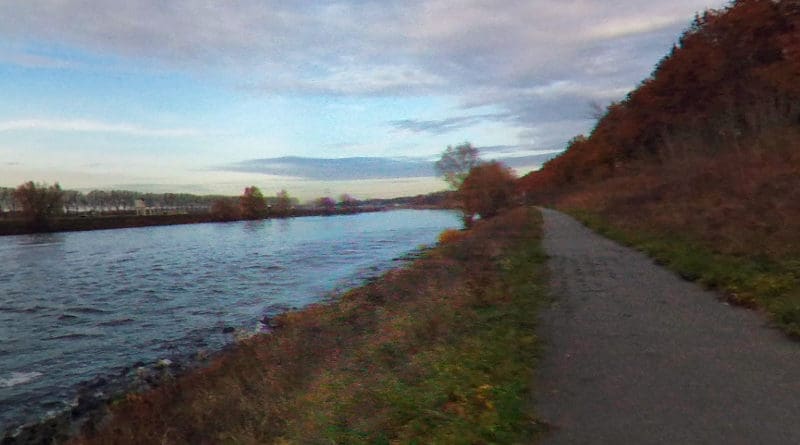
The nominees for Cycle Route of the Year have been announced. The international Meuse cycle route, formed in the Netherlands by LF routes, is one of the four nominees. On Friday 2 March 2018, the jury will present the winner with the Cycling Trophy (Fietstrofee). This happens on the first day of the Fiets en Wandelbeurs (Cycling and Walking Fair) at Jaarbeurs Utrecht.
The International Meuse Cycle Route in France, Belgium and, of course, the Netherlands officially opened this year.
The route is about 1,000 kilometres long in total. It follows the river from its source on the Plateau de Langres to its mouth at Hoek van Holland.
You can find the whole route at www.maasfietsroute.eu.
Nominees for Cycle Route of the Year
The other nominees are the Polish Green Velo (Greenvelo.pl), the ViaRhôna in Switzerland and France (www.viarhona.com) and the Swedish Kattegattleden (www.kattegattleden.se).
All the routes have been tested in practice. Over the coming months, the jury will decide which candidate succeeds “La Vélo Francette”, last year’s winner.
The award is an initiative of the Fiets en Wandelbeurs.
Its aim is to encourage governments and tourist services to create good-quality cycle routes that appeal to touring cyclists.
The Fiets en Wandelbeurs takes place on 10 and 11 February 2018 at Flanders Expo in Ghent. It also runs on 2, 3 and 4 March 2018 at Jaarbeurs Utrecht.
Cycle Routes
A cycle route is a path or road designed especially for cyclists. Cycle routes can be for recreation or for practical use. Recreational cycle routes are often long-distance routes that lead through beautiful nature areas or past sights. Practical cycle routes are usually shorter routes that take people to work, school or other destinations.
There are different types of cycle routes, such as:
- Cycle paths: these are built especially for cyclists and are often next to the road.
- Cycle lanes: these are a separate part of the road meant only for cyclists.
- Cycle routes on the road: these are ordinary roads that cars also use, but they have special markings. These show that they are also for cyclists.
Using cycle routes can make roads safer for cyclists, because they ride apart from cars. It can also help reduce the number of cars on the road, which can contribute to better air quality and less congestion.


