Mono Campaign Starts: Cycling and Texting Do Not Mix
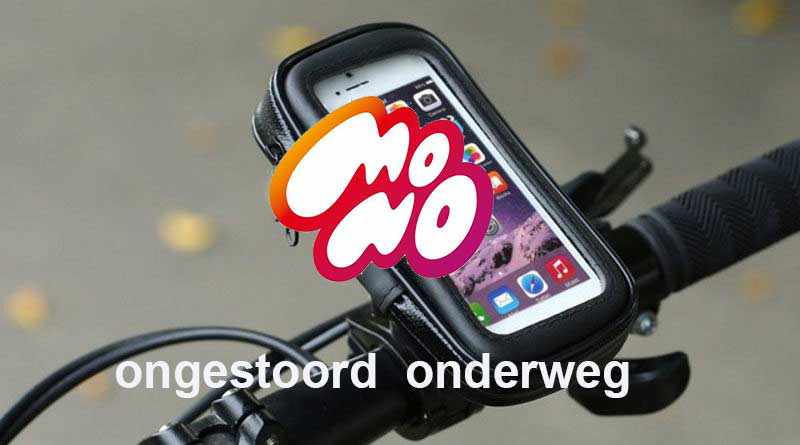
On Thursday 13 September, Cora van Nieuwenhuizen, Minister of Infrastructure and Water Management, launched the new traffic campaign Mono. The Mono campaign aims in particular to persuade road users not to text in traffic.
Using a phone in traffic is far from rare among the Dutch. According to figures from the SWOV, 62 percent of drivers sometimes use their phone while driving. Among cyclists aged 12 to 80, the figure was 54 percent.
Scientists have also shown that texting is dangerous for cyclists. For example, researchers at the University of Groningen studied the effect of different phone activities while cycling, including typing messages and playing games. In every case, the test subjects cycled more slowly, swerved more and picked up fewer signals from the corners of their eyes.
The Mono Campaign Starts
The Mono campaign will run for several years. The first part runs until mid-December. It starts with TV spots and information signs along the road, but the campaign will also get attention on social media and in cinema and radio spots. The campaign runs for several years because it tries to change behaviour, and that takes time!
It Is Voluntary
The campaign does not force anything and will only give tips. It focuses more on the do-not-disturb function, because many people do not know about it. So put your phone on silent or switch it off, put it away, preferably out of reach, and make sure it does not distract you in traffic.
Broad Support for the Mono Campaign
The campaign has broad support among the signatories of the covenant ‘Safe use of smart functions in traffic’. They drew it up in September 2017.
Bovag, the ANWB and RAI Vereniging are among them.
More than fifty parties have now signed the covenant.
Winner: WhatsApp
Which app distracts us most?
Finnish scientists investigated this in 2016. They tracked which apps thirty test subjects opened and how often they touched the screen.
The clear winner was WhatsApp.
Why So Much Attention for the Mono Campaign Now?
One of the reasons for the ‘Drive MONO, cycle MONO’ campaign is the rising number of road deaths in recent years.
In 2014, 570 people died in a traffic accident. In 2017, the figure was 613.
If you follow the line further back, last year still had fewer road deaths than 2012. So you cannot see a rise that goes together with the growing popularity of the smartphone. What is clear is that the sharp downward trend since the 1990s, when more than a thousand people died every year, has more or less levelled off at around 600 in recent years.
Nobody systematically records the role of phones in road accidents, so the share of mobile phones in the total number of accidents is not known, says Marjan Hagenzieker, professor of traffic safety at TU Delft.
‘The estimate is that it involves a few tens up to a hundred victims a year. That is not very precise, but there is no better figure at the moment.’
It is therefore hard to say anything meaningful about the exact effect of mobile phones on the number of road deaths based on these figures, says Hagenzieker.
Too many factors influence those deaths, including the number of kilometres travelled, changes in infrastructure and safety measures taken in recent years.


