Paris Opens Its First Cycle Superhighway
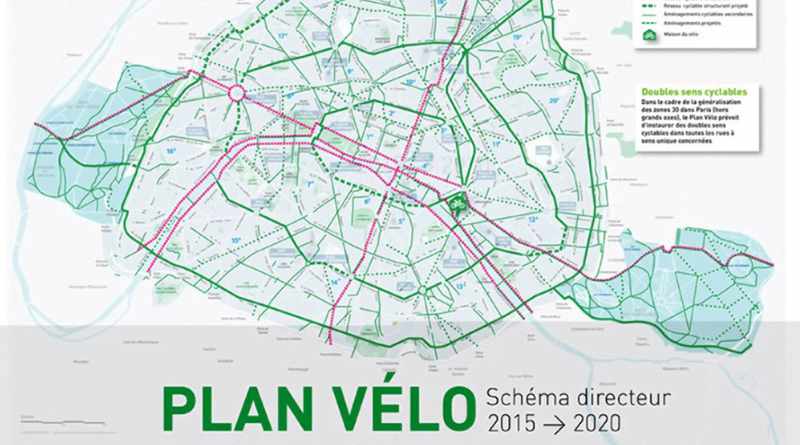
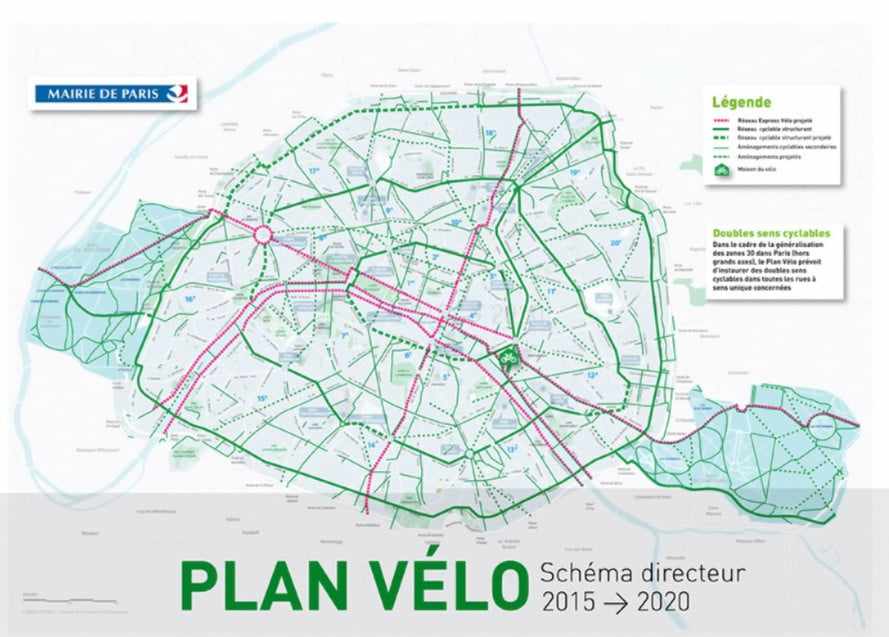 First stretch of cycle superhighway.
Paris has opened its first stretch of cycle superhighway. So far it is only a short stretch at the Bassin de l’Arsenal.
By 2020, however, it will be part of a 45-kilometre network of cycle paths and cycle superhighways.
The city has planned the whole superhighway, called Réseau express vélo (“REVe”), across the city.
Instead of adding cycle paths to existing roads, Paris chose to build a network free of other motor traffic.
For a busy city like Paris, this is a good way to get more people cycling, because cycling on normal roads is very risky.
If more people in and around Paris take up cycling, the city hopes to reach several goals.
These are better health for residents, fewer harmful exhaust fumes and less car traffic in the city centre.
An Investment
In 2015, Paris decided to set aside 150 million euros to tackle its cycling infrastructure.
This includes the REVe cycle superhighway.
The city has also created new traffic rules that are friendlier to cyclists.
For example, cyclists can turn at some junctions without waiting for a green light.
Besides the superhighway, the city also wants to make room for bike parking and for two-way cycling in one-way streets. It also plans smarter traffic lights that give priority to cyclists.
Not Many People on Bikes
If you look at the numbers, it is not surprising that the city wants to invest more in cyclists.
A 2014 study shows that cyclists make up only 5% of all traffic. That adds up to 225,000 trips.
That sounds like a lot, but the city makes 15.5 million car trips every day, so it is a drop in the ocean.
Compared with other cities, it is also tiny. Copenhagen (55% of traffic is cyclists)
Amsterdam (43%)
There is one more reason why things must improve. Most cyclists in Paris simply find the city’s roads too unsafe.
Although the city marks out cycle paths, other traffic blocks them. The new cycle superhighway should improve this, because cyclists will no longer share the road with all the other traffic.
In this way, Paris hopes to reach 15% daily cycle traffic by 2020.


