Is Park and Bike Finally Taking Off in the Netherlands?
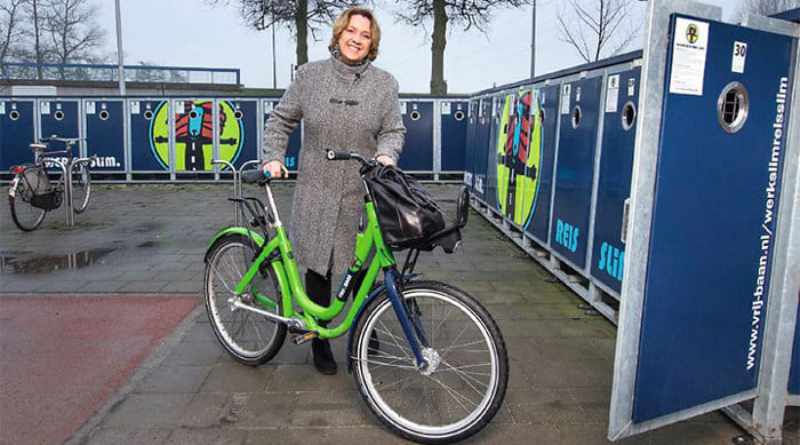
The park and bike concept (P+Fiets in Dutch) is still struggling to get off the ground in the Netherlands. Drivers park their car on the edge of the city and carry on by bike. Only in Leeuwarden does it seem to be catching on, although the government still has to give financial support. However, CROW thinks a commercial operation of P+Fiets is possible. CROW is an independent knowledge organisation for infrastructure, public space, traffic and transport. In its publication “P+Fiets, Snel en slim in de stad” (“Fast and smart in the city”), CROW explains how to set it up.
What Is Park and Bike?
P+Fiets stands for “Parkeren en Fietsen”, or parking and cycling. The idea is that drivers park their car on the edge of the city and continue their journey by bike. This helps both the driver and the city. There are fewer traffic jams, less parking pressure in the city centre and a healthier way to get around. However, despite these advantages, the concept has so far struggled to take off.
Earlier Attempts
The idea of encouraging drivers to switch to the bike is not new. In the past, people tried to set up P+Fiets facilities in several places. They tried the concept in Amsterdam, at the Olympic Stadium, and at park and ride sites around ‘s-Hertogenbosch and Utrecht. Despite the advantages, interest stayed limited. A recent example is the Veluwefietstransferium, a bike transfer hub near Harderwijk. During road works, about 150 people used it. After the works finished, only 40 irregular users remained.
Leeuwarden: A Cautious Breakthrough
Leeuwarden seems to be the first city where the concept is catching on to some extent. The first facility had technical start-up problems at first, but it is now going well. There are now 72 bike lockers at five locations, and the city plans to build more facilities aimed at commuters. In Leeuwarden, companies that want to reserve a locker pay 400 euros a year. Even so, the government still has to add 1,100 euros a year to make the system pay.
The Role of the Government and CROW
CROW argues for a solid business case before a council starts a park and bike project. This business case should show how much a council must add to make the project succeed, especially at the start. In addition, councils must decide what users should pay. They must also find other sources of funding. Experience shows that the best system is a network of several smaller sites along the approach routes. These sites should lie at a reasonable cycling distance from the destination. This helps to prevent city traffic from grinding to a halt. It also gives users a seamless switch to the bike.
Future Prospects
Although the concept has had limited success so far, there are signs that people may accept P+Fiets more widely in future. Councils such as Maastricht are already considering several sites, possibly with a bike-share system. However, it is clear that without a firm financial and organisational basis, the chance of success stays limited.
The CROW publication offers valuable insights for councils that want to roll out this concept. With the right approach and support, P+Fiets may finally get off the starting blocks and become an effective way to improve urban mobility.
Source: Crow


