Analysing Pedal Force, Speed and Battery Use
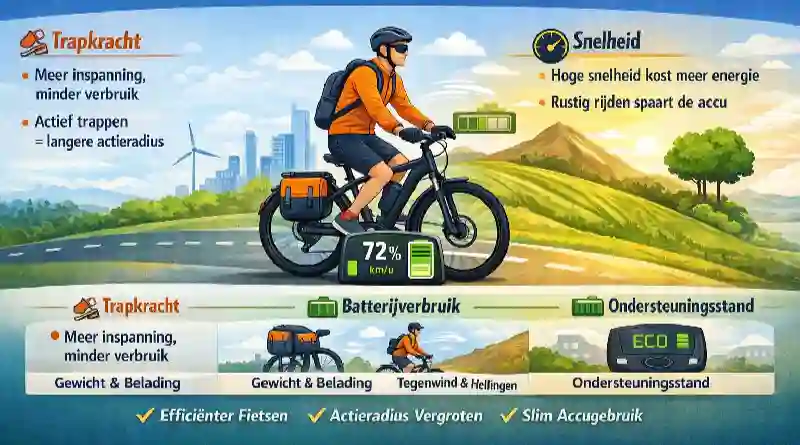
Electric bikes have become smart, but many cyclists do not know exactly how pedal force, speed and battery use affect each other. Yet this link matters when you want to get more out of an e-bike. If you understand how these three factors work together, you can not only ride more efficiently but also extend your range and put less strain on the battery. This is relevant for commuting, leisure rides and longer trips where you do not want to be left without assistance halfway.
What Does Analysing Pedal Force, Speed and Battery Use Mean?
An analysis of pedal force, speed and battery use looks at how your effort works together with the bike’s electric assistance. Pedal force is how much force you put on the pedals. Speed shows how fast you ride in given conditions. Battery use shows how much energy the motor and battery need to provide that assistance. When you look at these three together, you get a clear picture of how efficiently an e-bike rides.
On modern e-bikes, sensors often measure some of these values. A force sensor records how much pressure you put on the pedals, while speed sensors and software work out how much assistance is needed. The less you do yourself, the more the motor has to take over. In the end, you see that in energy use. If you pedal actively in a lower assistance level, the battery often lasts longer.
Why This Analysis Matters
For many e-bike users, it is not only about comfort but also about range, sustainability and performance. A good analysis helps you understand why the battery runs down much faster on some rides than on other days. Headwind, tyre pressure, weight, hills and riding style all play a role, but pedal force and chosen speed are often the biggest influences.
If you constantly accelerate hard or ride with maximum assistance, you ask more of the motor. As a result, battery use goes up. Conversely, a steady pedal stroke and a stable speed are usually more economical. This makes the analysis useful for anyone who wants to manage charge and maintenance more smartly. This information also gives a lot of insight when you compare e-bikes or assistance modes.
More Pedal Force From You Often Means Less Battery Use
Pedal force is one of the key parts of efficient e-biking. On a bike with a mid-drive motor, the assistance often responds straight away to the force you put in. If you pedal firmly, the motor helps in a natural way without having to work at its maximum all the time. As a result, use is usually lower than when you pedal very lightly and ask a lot of the motor.
That does not mean pedalling harder is always more economical. What matters is a balanced effort. If you ride in a gear that is too heavy and put in too much force in short peaks, that can actually be less efficient. Pedalling regularly and smoothly works better. A steady cadence combined with a suitable assistance level usually gives a good balance between effort and battery use.
Sensors Decide How the Motor Responds
Not every e-bike responds to pedal force in the same way. Simpler models more often use a rotation sensor, which mainly measures whether you pedal. More advanced systems use a torque sensor, which also measures how hard you pedal. With the latter systems in particular, pedal force analysis is valuable, because the assistance is much more directly linked to your own effort. This feels more natural and also gives a more accurate picture of battery use.
The Role of Speed in Battery Use
Higher Speed Needs More Energy
At first sight, speed looks like a comfort factor, but it has a big effect on how much power the battery uses. The faster you ride, the more air resistance you meet. Above 20 km/h in particular, that resistance clearly increases. The motor then has to work harder to keep giving the same assistance. On flat terrain you sometimes notice this less, but over a longer distance you clearly see the difference in range.
If you constantly want to ride at the top speed of the assistance, you use the battery faster than someone who rides a little more calmly. The difference per kilometre need not be huge, but over a whole ride it adds up. For that reason, experienced e-bikers often choose a slightly lower cruising speed on long rides. That saves energy and often feels calmer and more stable.
Accelerating and Braking Count for a Lot
Not only average speed matters, but also the way you build up speed. Accelerating a lot costs a fair amount of energy, especially with a heavy load or a headwind. In city traffic, where you often brake and speed up again, battery use is therefore usually higher than on a steady route outside built-up areas. A smooth riding style, with looking ahead and fewer abrupt accelerations, helps you ride more economically.
Understanding Battery Use in Practice
Battery use is usually expressed in watt-hours per kilometre or in estimated range. Still, a battery percentage on its own says far from everything. A ride with many bridges, wind or luggage needs more power than a flat route in calm weather. Tyre pressure, the condition of the battery and the outside temperature also affect the result. So it is smart never to look at battery use separately from pedal force and speed.
If you pedal actively and manage your speed better, you will often notice that the remaining charge drops more slowly. On many displays or apps, you can follow and compare ride data. This shows which riding style gives the best results. This practical data makes an analysis useful. Not theory alone, but the combination of measured data and your own experience shows how your e-bike really behaves.
Which Factors Also Affect the Measurement
Weight and Load
A heavy rider, full panniers or a child seat put extra load on the motor. You see this in energy use, especially when accelerating and on hills. The battery then has to supply more energy to hold the same speed. This means comparisons between rides are only fair when the conditions are similar.
Weather and Road Surface
Headwind is one of the biggest users of battery capacity. A wet road, unpaved paths or poor asphalt also increase rolling resistance. As a result, the motor has to work harder. In a strong headwind, a normally economical ride can suddenly need much more energy, even when your speed and pedal force stay about the same.
Assistance Mode and Gears
The assistance mode you choose directly affects how much power you use. In turbo or high mode, battery use rises much faster than in eco mode. At the same time, gearing matters too. A good gear helps you keep pedalling smoothly, so the motor can assist more efficiently.
How to Improve the Balance Between Pedal Force, Speed and Battery Use
An efficient riding style starts with riding consciously. Choose an assistance mode that suits the route and try not to ride with maximum assistance all the time when you do not need to. Keep a steady pedal stroke and change down in time in a headwind or on a hill. That way you avoid pedalling too heavily or the motor suddenly having to deliver a lot of extra power.
It also helps to moderate your cruising speed a little on longer rides. A few kilometres per hour slower can already make a noticeable difference to battery use. Check your tyre pressure regularly, limit unnecessary luggage and charge the battery according to the manufacturer’s guidelines. If you combine these points, you will usually get more kilometres from the same charge without losing comfort.
Useful Applications of Pedal Force, Speed and Battery Use Analysis
Analysing pedal force, speed and battery use is not only interesting for tech fans. Ordinary cyclists benefit directly too. Commuters can better judge which assistance mode suits the trip there and back. Leisure cyclists can plan their range better. And with maintenance or performance problems, unusual battery use can be a sign that something is not working well, such as a worn battery, wrong tyre pressure or an inefficient riding style.
For manufacturers, dealers and testers, this analysis is also useful to compare e-bikes more objectively. Not only the maximum range counts, but above all how a bike performs in realistic conditions. This gives you a more complete picture of comfort, efficiency and practical use.
How does pedal force affect the battery use of an e-bike?
More pedal force from you usually means the motor does not have to work as hard. As a result, battery use often falls noticeably. On e-bikes with a torque sensor in particular, the assistance responds directly to your effort. A steady, active pedal stroke therefore helps you ride more efficiently and extend the battery range.
Does an e-bike use more battery at higher speed?
Yes, a higher speed usually leads to more battery use. This is mainly because of rising air resistance, which makes the motor deliver more energy. On longer rides in particular, you notice that a slightly lower cruising speed is often more economical. Riding more calmly can therefore help you get more kilometres from one charge.
Why does my battery drain faster in the city than on a long straight route?
In city traffic, you stop, accelerate and brake more often. Getting back up to speed costs a fair amount of energy. On a long straight route, you usually ride more steadily, so the motor works more evenly. As a result, battery use in the city is often higher, even when the total distance is shorter.
Which assistance mode is the most economical for the battery?
Eco mode is usually the most economical, because the motor then delivers less power. That does mean you have to pedal more actively yourself. For flat rides and normal weather, this is often the best choice. Higher modes are handy in a headwind or on hills, but they do use the battery faster.
Can you measure battery use accurately while cycling?
Yes, many modern e-bikes show data on battery percentage, speed and sometimes even use per ride on the display or in an app. This information gives a useful picture, although factors such as wind, temperature and weight still play a part. By comparing several rides, you get an ever more accurate view of your real energy use.


