BOVAG PGS 37.2 Tool for Safe Battery Storage
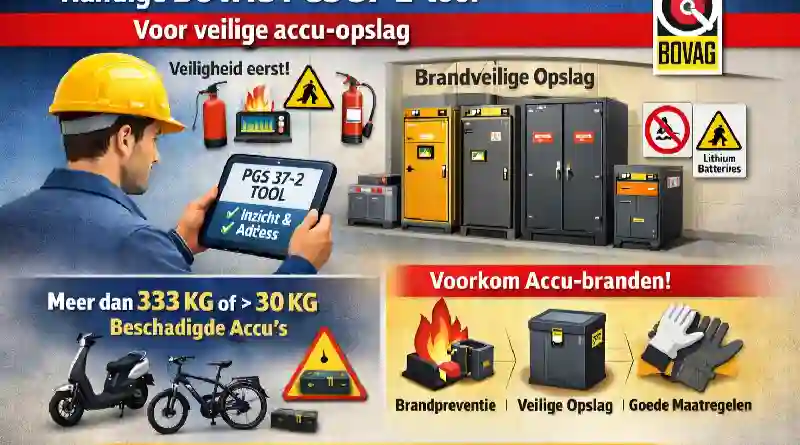
The BOVAG PGS 37.2 tool helps businesses handle electric vehicle batteries safely. Safety rules are getting stricter and storage risks are growing, so clear guidance is essential. This article explains what PGS 37.2 means and how the tool gives you practical insight into the measures that apply to your business.
What is PGS 37.2?
PGS 37.2 stands for Publicatiereeks Gevaarlijke Stoffen 37.2 (the Dutch Hazardous Substances Publication Series). It describes how businesses must store and manage lithium-containing energy carriers safely. In other words, it covers batteries from e-bikes, scooters, motorbikes, cars, vans and trucks.
The guideline applies when:
- you store more than 333 kilos of new or used batteries (including batteries in vehicles);
- or you store defective or damaged batteries: then a limit of 30 kilos already applies.
For illustration, 333 kilos equals about one hundred e-bike batteries, thirty scooters or sometimes just one battery-electric car.
Why safe battery storage matters more every year
Electric mobility is growing fast, and so is the risk of incidents. Lithium-ion batteries can cause a fire if they are damaged, overheated or stored incorrectly. As a result, businesses in the two-wheeler, mobility and transport sectors increasingly face stricter requirements from fire services, insurers and municipalities.
Applying PGS 37.2 properly reduces safety risks. It also prevents downtime and liability problems.
What does the BOVAG PGS 37.2 tool do?
The PGS 37.2 guideline is technical and extensive. That is why BOVAG has developed an online tool that guides businesses step by step.
How the tool works
- You enter details about your business and the type of energy carriers.
- Then the tool works out which rules and measures apply to your situation.
- You get an overview in plain language, without complex legal text.
- It also includes practical tips on layout, storage and management of batteries.
In addition, you can get support through BOVAG Ledenadvies (member advice) or choose a tailor-made Compliance Scan.
Who is the tool for?
The tool is mainly relevant for:
- bike shops and scooter businesses
- mobility businesses with electric vehicles
- workshops and storage sites
- dealers of electric cars and light commercial vehicles
Businesses that store batteries only temporarily (for repair or refurbishment, for instance) often fall under the guideline too.
After looking at the BOVAG PGS 37.2 tool, some practical questions often remain. Below, we answer the most common ones.
Frequently asked questions about the BOVAG PGS 37.2 tool
When is PGS 37.2 mandatory for my business?
PGS 37.2 applies as soon as you store more than 333 kilos of lithium-containing batteries, including batteries in vehicles. For defective or damaged batteries, a lower limit of 30 kilos already applies. Temporary storage also counts when you work out whether you must follow the guideline.
Do batteries in vehicles count towards the BOVAG PGS 37.2 limit?
Yes, batteries in e-bikes, scooters, cars or other vehicles all count in full. This means a workshop or showroom can pass the limit sooner than many business owners expect.
Is the tool free to use?
The tool is available to BOVAG members and gives instant insight into the measures that apply. However, extra costs may apply for additional support, such as personal advice or a Compliance Scan, depending on the service.
Does the tool also explain what I should do in practice with BOVAG PGS 37.2 ?
Yes, the tool turns the technical PGS 37.2 requirements into concrete actions. For example, it gives advice on storage locations, fire prevention, keeping batteries apart and handling damaged energy carriers safely.
Can I get help if I am stuck?
Besides the tool, BOVAG offers support through Ledenadvies. You can also have a Compliance Scan carried out, which checks your business specifically against the guideline.


