Pinion: A Central Gearbox in the Bottom Bracket
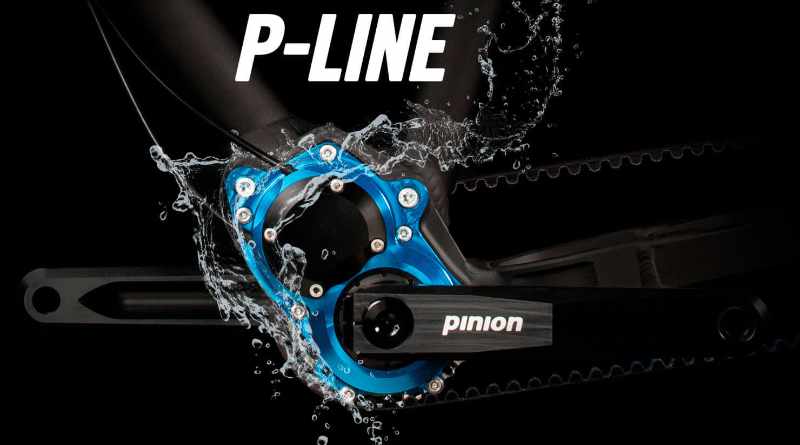
Pinion has developed the new C-line transmission for bikes with mid-drive bottom bracket motors. It is designed for everyday bikes, touring bikes and mountain bikes. The new C-line transmission makes bikes lighter than was possible before. This transmission offers 6, 9 or 12 gears. The technology comes from the car industry and gives bikes with a bottom-bracket gearbox benefits such as low maintenance costs and a central weight directly under the bike. The C-line is also available on bikes around €2,000, not only on more expensive models. However, you cannot buy a Pinion gearbox separately.
Pinion Gearboxes
Pinion makes gearboxes that sit in the middle of the bike. Michael Schmitz and Christoph Lermen developed this gear system. They both worked in the transmission department at Porsche. After designing gearboxes for sports cars, they realised that the same techniques could work for bikes.
The Origin of the Pinion Gearbox
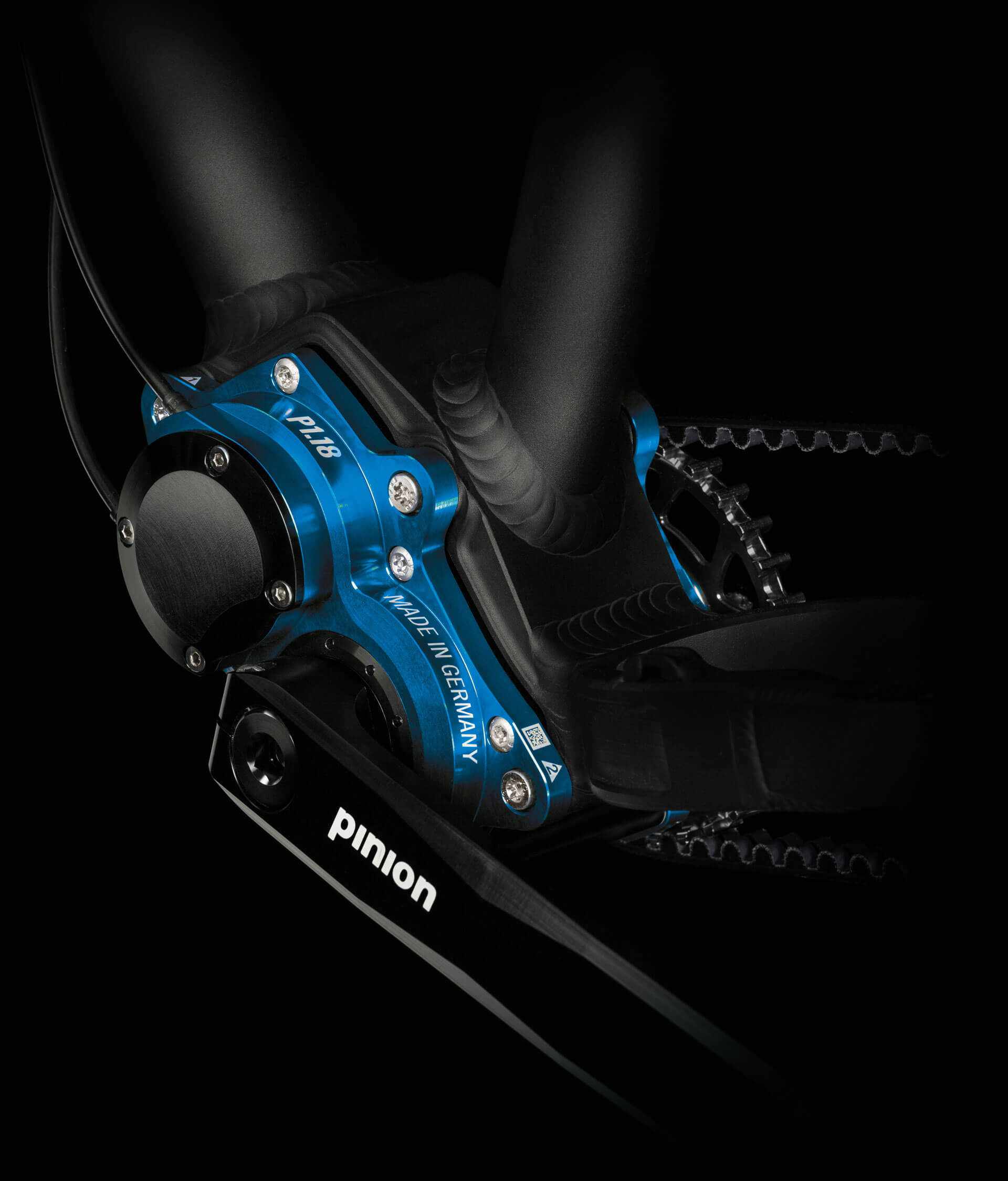
The aim was to make a durable, low-maintenance gear system with a wide gear range and good weight distribution. The first product was the Pinion P1.18 with 18 gears. Michael and Christoph developed their gearboxes as an alternative to the famous 14-speed hub from Rohloff, another German company.
During development, the team tested the product intensively in the MTB downhill scene. When the gearbox was ready for production in 2012, we soon saw it appear on marathon mountain bikes and trekking bikes. At BongersBikes, we became the first authorised Pinion dealer and service centre in the Netherlands.
Since then, Pinion has expanded its range with 6-, 9- and 12-speed systems. Besides models from Santos, Idworx and Van Nicholas with the 18-speed P1.18 gearbox, we also have bikes with the 12-speed C1.12 in the shop.
How Does a Pinion Gearbox Work?
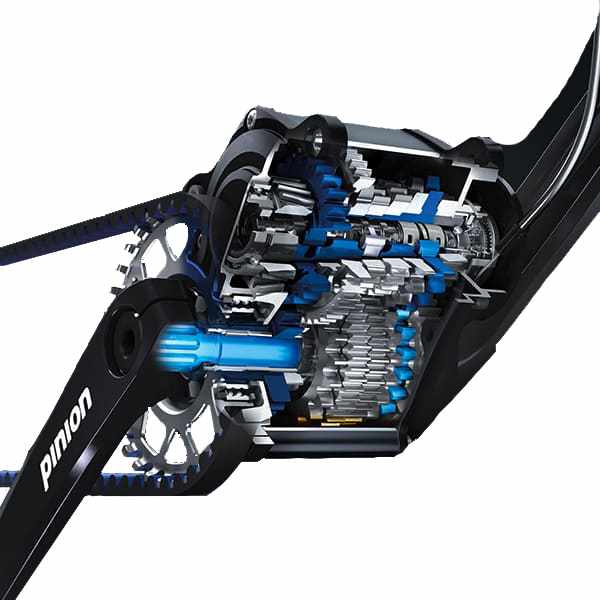 The Pinion transmission works in a similar way to a car gearbox: a closed housing with three shafts and a series of gears of different sizes, running in an oil bath. In a car, the engine drives the input shaft and the output shaft leads to the driven wheels. The intermediate shaft sets the different gear ratios, so the output shaft turns at a different speed from the input shaft. Simple, right?
In cars, the input and output shafts are in line with each other or parallel. Michael and Christoph placed these two shafts over each other, which made the whole unit more compact and let it fit in the bike’s bottom bracket. Your legs are the engine, and you transfer power to the input shaft through the pedal cranks. You change gear by turning a twist grip, which engages different pairs of gears, and then the output shaft drives the front chainring. It may sound complicated, but trust us: it works!
The Central Position of the Pinion Gearbox
The whole gearbox bolts into the bottom bracket position under the frame. To use it, bike makers have to build a special frame. Like a Rohloff hub, a Pinion gearbox is not especially light. However, because it sits in the bottom bracket, the centre of gravity stays nice and low and central, so the rear wheel stays pleasantly light. You hardly notice the extra few hundred grams of a Pinion gearbox compared with a derailleur system.
The Pinion has a relatively small front chainring and a rear sprocket of the same size. This small chainring gives extra ground clearance, so rocks and tree trunks do not easily damage the chainring and the belt or chain.
The Pinion Is Very Efficient
The gears, bearings and shafts are designed for a long life and high efficiency. It is German solidity with the precision of a Swiss watch! In practice, you can really feel this high efficiency. The gearbox pedals pleasantly lightly!
Low Maintenance With the Pinion
All the rotating parts of the Pinion transmission are sealed in an aluminium housing. Water and dirt do not bother the gearbox. With the Rohloff hub, you only need to change the oil every 5,000 km. With the Pinion, you only need to do it every 10,000 km, or once a year!
- Mud? With a Pinion, you can laugh at it.
Easy Operation
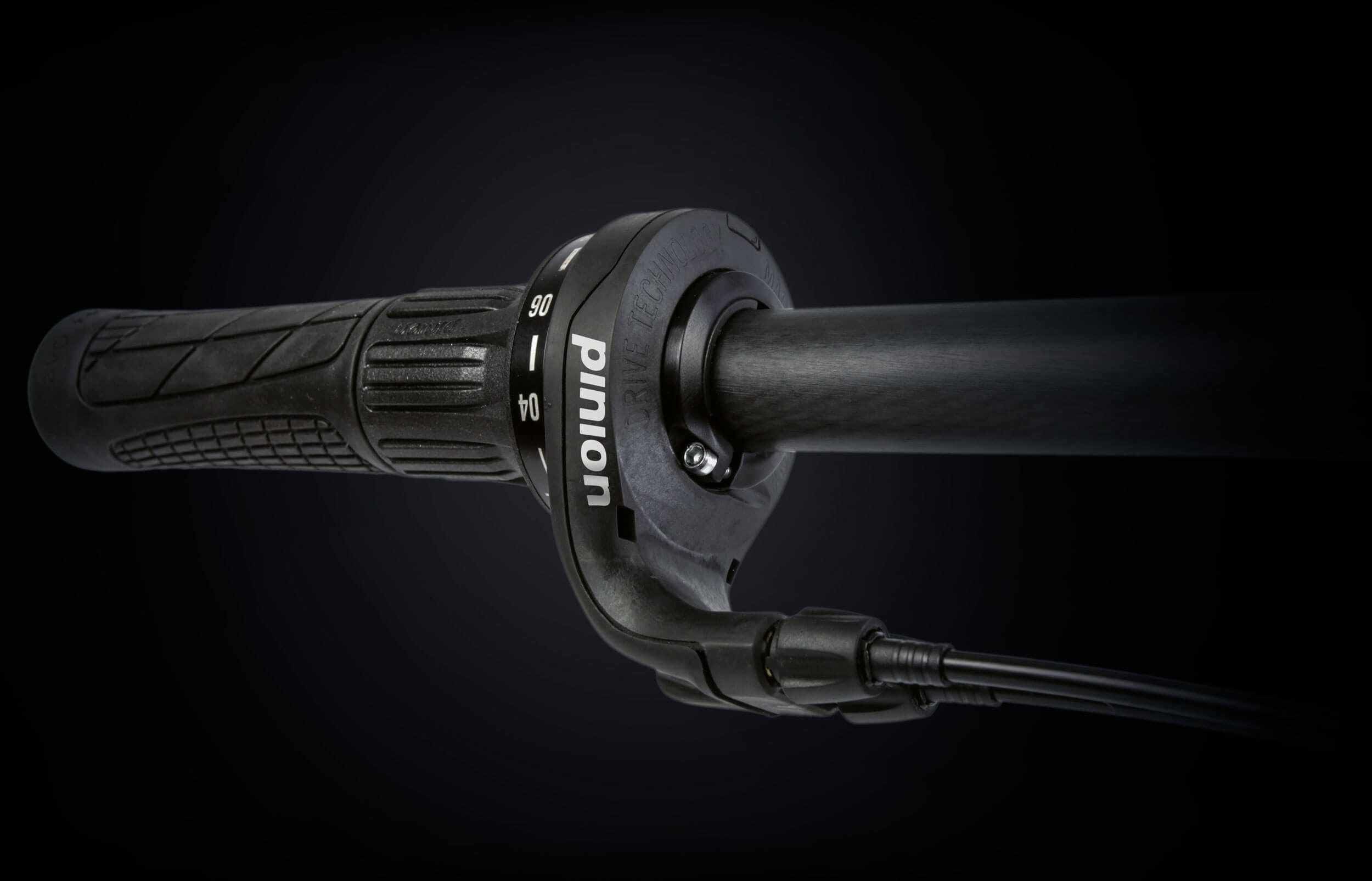
You operate the gears easily with a twist grip. You can shift up and down through several gears quickly, even when the pedals are not turning.
The twist shifter operates the gearbox with two pull cables, which, unlike on a derailleur system, are not under constant tension. Because the cables are relatively short, there is little internal friction and shifting feels pleasantly light.
The indexing (the click) of the gears is in the gearbox, not in the twist grip. So adjusting gears is a thing of the past!
Pinion Bikes Are E-Bike Ready
A big advantage of the bottom-bracket gearbox over the Rohloff hub is that you can convert bikes with this transmission to e-bikes relatively easily. A Pinion combines perfectly with electric systems that have a rear-wheel motor. With the gearbox in the bottom bracket, the motor can sit neatly in the rear wheel, and the battery goes on the down tube for good weight distribution.
Several brands supply rear-wheel motor systems as a complete kit. They consist of a motor, battery, display, control buttons and a wiring loom. Because the cables run on the outside, you can always disconnect and replace parts.
The brands Idworx and Santos supply their Pinion models from the factory with the Neodrives system from Alber. You can also have your current Pinion bike converted later.
Pinion Variants
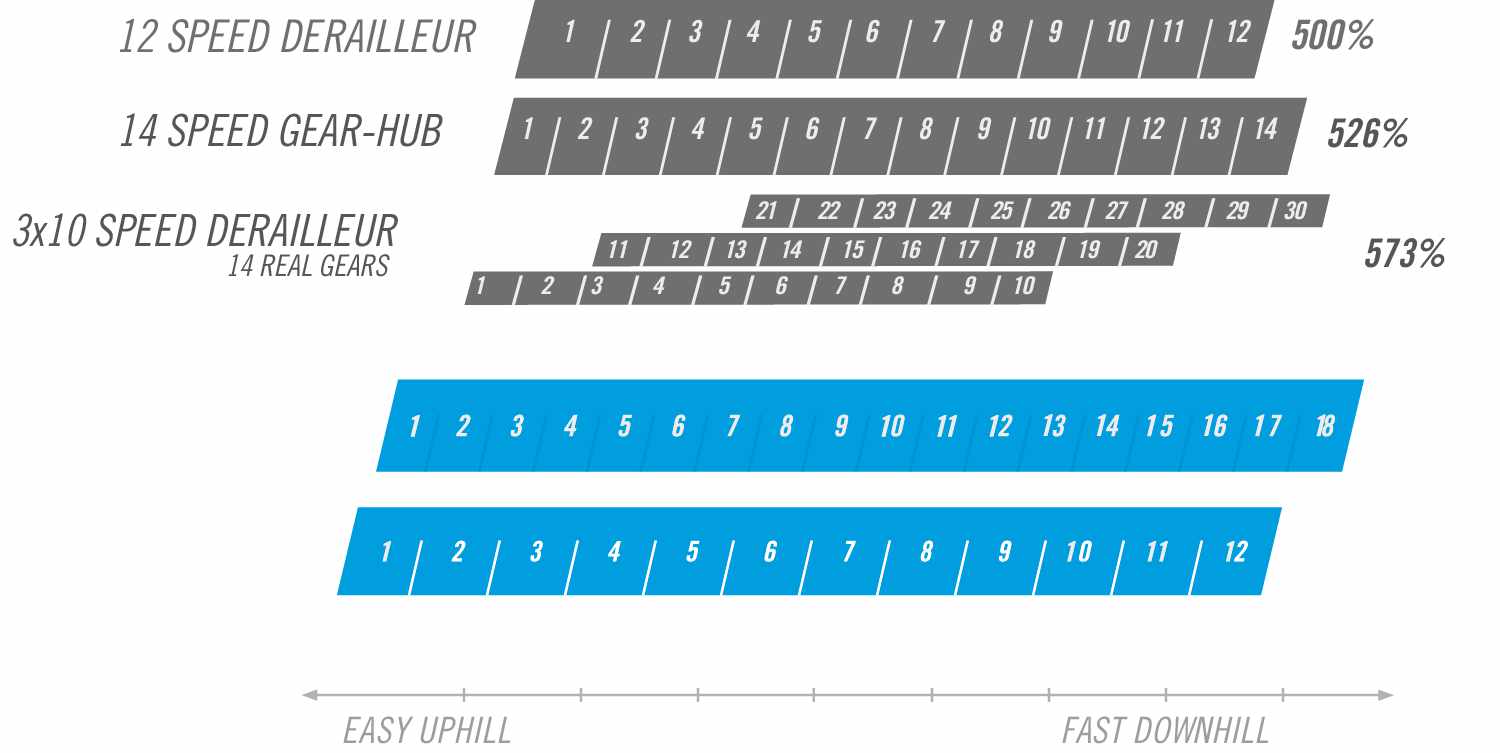
There are several variants of Pinion gearboxes, with 6, 9, 12 or 18 gears. Santos, Idworx and Van Nicholas only work with the 12- and/or 18-speed variants. We leave the 6- and 9-speed Pinions out of the overview below. However, we have put the Rohloff data next to it, because people always compare Pinion with Rohloff first.
Source for more information about Pinion on the website.


