Reflective Dots Improve Guidance on a Narrow Cycle Path
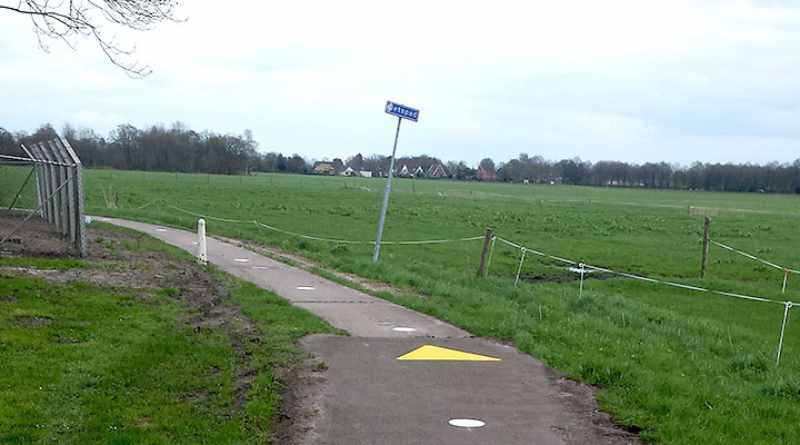
In the north of the Netherlands, people are experimenting more and more with reflective markings to make cycle paths safer. One of the newest examples uses reflective dots on a narrow cycle path in Westerbroek, a village in the municipality of Hoogezand-Sappemeer. The dots guide cyclists, so they help prevent accidents.
Reflective Dots: Innovative Markings for Narrow Paths
Previously, cycle paths in the provinces of Friesland and Groningen got 30 cm wide reflective edge markings. These markings help cyclists stay on the path, so they do not end up in the verge. This is especially useful on dark or poorly lit paths. One material used for this is Luxovit, a reflective chipping that is worked into the asphalt.
In Westerbroek, the same reflective material now comes in the form of dots with a diameter of 248 mm. The dots are placed at regular distances along the cycle path. Lampposts were not an option here, because of light pollution and the high costs of building and maintenance. Besides, the path is narrow. It varies from 1 to 2.5 metres wide, which leaves too little room for edge markings.
Benefits of Reflective Dots
The reflective dots are five metres apart, centre to centre. With their own bike lights, cyclists can see about five dots ahead. This helps them keep their line, especially on dark evenings or in bad weather. The dots give visual guidance, so there is no need for big changes to the infrastructure, such as installing lampposts.
This kind of marking is especially useful on narrow cycle paths where space is limited and standard edge markings are not possible. The dots make the path easier to see and help cyclists find their way safely. As a result, they contribute to overall road safety.
Extra Safety Measures for Slippery Conditions
Besides the dots, PolyCiviel, the company running the trial, added another safety measure to the Westerbroek cycle path. At the start and end of the path, there are yellow triangles with an ice crystal symbol. Normally, you cannot see this symbol. However, when the temperature of the asphalt or concrete drops below freezing, the ice crystal turns red. This warns cyclists that the path may be slippery.
This visual warning is especially useful because the cycle route is not part of the gritting route, due to its limited width. Therefore, cyclists get a timely warning about slippery conditions. As a result, the risk of accidents can fall considerably.
The Future of Reflective Cycle Path Markings
The Westerbroek trial shows how innovations such as reflective dots can improve cyclist safety, especially on narrow cycle paths or paths that are hard to light. If the technology proves successful, it could become a model for other municipalities and provinces in the Netherlands.
Reflective materials are not new, but using them as dots on narrow cycle paths is. This approach is an effective and cost-efficient way to improve road safety without major changes to the infrastructure.
Conclusion
The introduction of reflective dots on the narrow Westerbroek cycle path is a promising step for cycling safety. They give cyclists visual guidance and warn them about slippery conditions, so they help prevent accidents and make cycling safer. Innovations like this show why it is important to keep looking for new ways to protect cyclists, especially where standard solutions fall short.
Source: Verkeersnet


