Fietsersbond Wants Billions Invested in Safer Cycle Paths
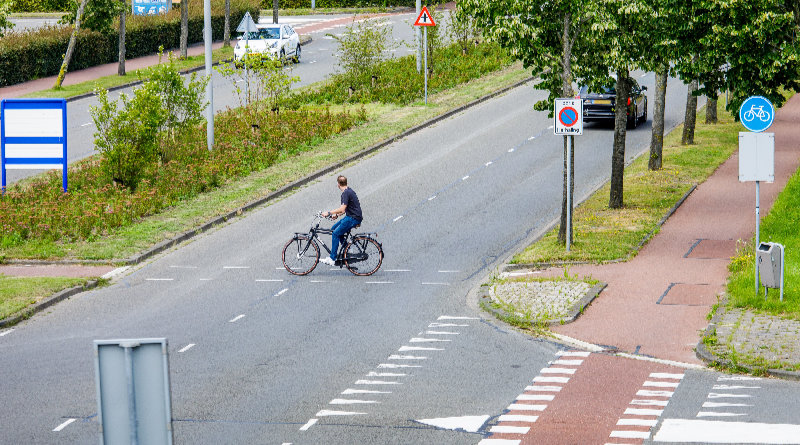
The Fietsersbond (the Dutch cyclists’ union) and Bouwend Nederland (the construction industry association) are sounding the alarm. The Netherlands may be known as a cycling country, but many cycle routes are still dangerous. According to the organisations, big investments are needed to let cyclists get from A to B safely. They call on the cabinet to make 2.3 billion euros available for building and improving safer cycle paths.
Unsafe situations on busy cycle routes
Recent research by the engineering consultancy Sweco shows that many Dutch cycle routes do not meet safety requirements. Sweco analysed municipalities where cycle paths are busy, with more than 150 cyclists a day. It found that many routes are unsafe, mainly because of:
-
Mixed roads where cars and cyclists share the same carriageway.
-
Cycle paths that are too narrow where cyclists can hardly overtake or swerve.
-
Big speed differences between cars (50 to 80 km/h) and cyclists.
Cyclists face extra risk, especially on mixed roads without separate cycle paths. Drivers often see cyclists too late, especially when turning. As a result, relatively many serious accidents happen here.
Investing in safer cycle paths pays off many times over
The Fietsersbond and Bouwend Nederland therefore argue for a large-scale investment of 2.3 billion euros. The money should go to:
-
Building separate cycle paths next to busy roads.
-
Widening existing cycle paths.
-
Redesigning junctions and crossings where cyclists are often in danger.
The investment looks large, but the research shows it more than pays for itself. The researchers estimate that over thirty years it would:
-
Prevent more than 10,000 injuries.
-
Avoid over 220 road deaths.
-
Save about 9.1 billion euros in social costs.
Cycling must be safer and more attractive
According to Esther van Garderen, director of the Fietsersbond, it is not only about safety. “Safer cycle paths get more people on their bikes. That is good for health, the environment and accessibility.”
Arno Visser, chair of Bouwend Nederland, agrees: “Everyone knows the feeling: cycling on a path that is too narrow while cars race past at high speed. That is not just unpleasant, it is genuinely dangerous. A good cycle path network brings comfort and safety.”
More cycling supports sustainability
Besides safety and health, sustainability also plays an important role. When more people choose the bike instead of the car, that directly cuts CO₂ emissions. Building safe cycle paths therefore fits wider climate goals and encourages sustainable mobility.
The Fietsersbond stresses that investing in the bike is a sustainable choice for the long term. Municipalities that have already invested in safe, wide cycle paths often see more cycling and fewer traffic casualties.
A call to politicians for safer cycle paths
With elections and coalition talks ahead, the organisations want to put the topic high on the political agenda. They call on central government to act on this investment and to support municipalities in carrying it out.
According to the union, it is not a matter of luxury but of necessity. “Everyone has the right to a safe route from home to work, school or sports club. Cycling should never be a risk.”


