Skinnybike Sales Rise as Fatbike Bans Spread
Growing Demand for Skinnybikes in the Netherlands
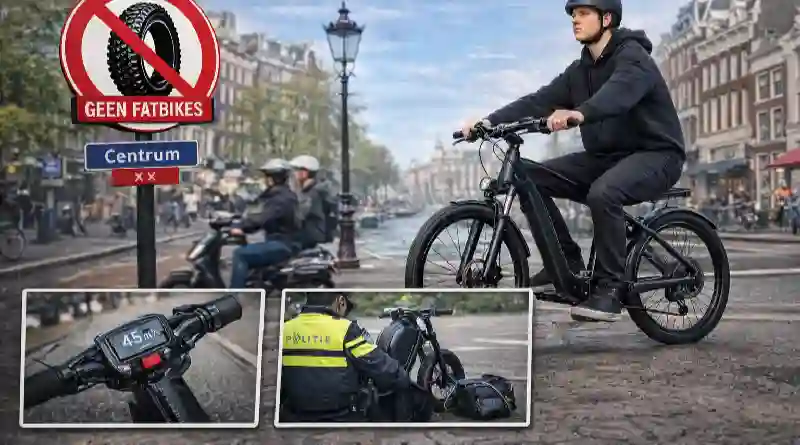
Sales of skinnybikes are rising strikingly fast in the Netherlands. This follows directly on local fatbike bans in cities such as Enschede and Amsterdam. Rules there now say that electric bikes with tyres wider than 7 centimetres can no longer ride in certain areas. Manufacturers and sellers are responding quickly by developing alternatives that do fall within the rules.
Skinnybikes are electric bikes with a similarly robust look to fatbikes, but with much thinner tyres. As a result, they technically meet the current requirements, while they offer consumers an attractive alternative. According to several sellers, demand for these bikes has risen sharply over the past year. New deliveries often sell out straight away, which points to a clear shift in the market.
Smart Adaptation by Manufacturers and Sellers
The rapid rise of skinnybikes is no coincidence. Manufacturers have been taking possible fatbike rules into account for some time. By changing the design fairly easily, they can respond to changing legislation without losing their target group.
One example is La Souris, where demand for skinnybikes is growing fast. Consumers who earlier considered a fatbike now more often choose a model that looks similar but legally stays within the rules.
Also, people actively promote skinnybikes on social media, where sellers present them as the “legal alternative”. Young people in particular turn out to be sensitive to this marketing, which strengthens growth further.
A Focus on Looks Misses the Real Problem
According to organisations such as Veilig Verkeer Nederland and the Fietsersbond, the core of the problem is not the type of bike, but how people use it and its technology. Regulating tyre width turns out to be easy to get around, as the rise of skinnybikes clearly shows.
The current legal framework also makes no distinction between different kinds of e-bikes. This keeps enforcement complex and leaves room for creative readings of the rules. Earlier studies by the ministry show that specific rules for fatbikes, for example, are hard to put into practice.
Illegal E-Bikes and Road Safety
A bigger problem is the growth of illegal and tuned e-bikes. These bikes can reach speeds far above the permitted limits, which creates dangerous situations in traffic. People increasingly offer such models online in particular.
Experts point out that this very category of vehicles is a serious risk to road safety. It is not only about speed, but also about the lack of proper technical checks and certification.
For this reason, authorities are looking at wider measures that apply to all e-bikes. The cabinet is considering, for example, a helmet requirement for riders under 18 from 2027. People also propose a minimum age and stricter checks on illegal modifications.
Why Enforcement and Clear Rules Matter
Both sellers and interest groups stress that effective enforcement is essential. Without checks, new variants such as skinnybikes will keep getting around the rules. This undermines not only the intent of the law but can also lead to unsafe situations.
Taking tuned or illegal bikes off the road faster counts as an important step. There is also a need for clear, uniform rules that are not easy to get around.
The current situation shows that rules aimed at outward features are not effective enough. A broader approach, aimed at technology, use and enforcement, seems necessary to really improve road safety.
After looking at skinnybikes and fatbike bans, a few practical questions often remain. Below, we answer the most common ones.
Frequently Asked Questions About Skinnybikes and Fatbike Bans
What is a skinnybike?
A skinnybike is an electric bike with narrow tyres that looks like a fatbike. The main difference is the tyre width, which puts the bike within current rules. Makers developed these bikes as an alternative to fatbikes, and people often choose them for their similar look and performance.
Why do municipalities ban fatbikes?
Municipalities are banning fatbikes locally because of concerns about road safety and nuisance. The mix of high speed, young riders and limited enforcement plays a part in particular. Municipalities try to limit risks with this measure, although it is proving hard to make it effective in practice.
Are skinnybikes legal to sell in the Netherlands?
Yes, skinnybikes are currently legal to sell as long as they meet the general e-bike rules. Among other things, this means the motor has a maximum power of 250 watts and gives assistance up to 25 km/h. Future rules may change this, however.
What are the risks of tuned e-bikes?
Tuned e-bikes can reach much higher speeds than allowed, which is dangerous in traffic. They also often fail to meet safety standards and are illegal in many cases. This raises the risk of accidents and legal problems.
Will there be a helmet requirement for e-bikes?
The cabinet is studying a helmet requirement for young people under 18, possibly from 2027. This is part of wider measures to improve road safety. Final introduction depends on further decisions.


