How VAUDE Leads the Way with Its 2040 Net Zero Target
VAUDE Cuts Emissions Consistently – On the Road to VAUDE Net Zero 2040
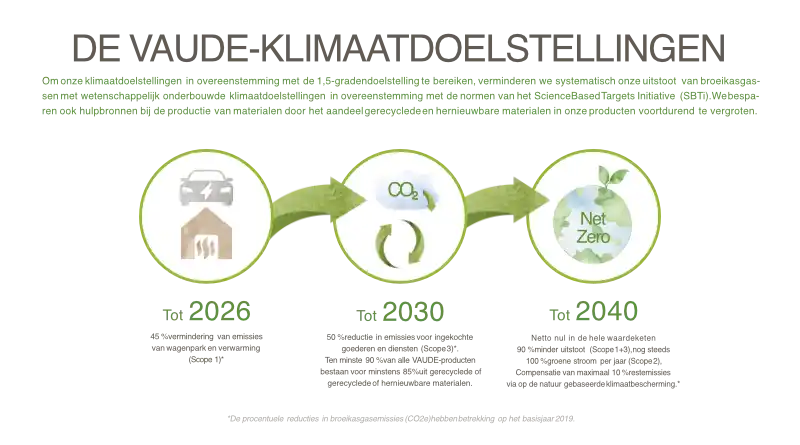
Tettnang, 24 September 2024 – VAUDE, a leading outdoor brand, is firmly committed to climate protection. Its VAUDE net zero 2040 plan sets out ambitious steps to reach Net Zero by 2040. This means the company will offset as many greenhouse gases as it emits, in line with the global 1.5-degree goal of the Paris Climate Agreement. VAUDE aims to cut its emissions by 50% by 2030 and by 90% by 2040 (compared with 2019). Nature-based measures will offset the remaining 10%, which it cannot avoid.
Climate Change as the Biggest Challenge
Climate change is one of the biggest challenges of our time. Its effects, such as the recent floods in Central and Eastern Europe, show how important it is to limit global warming. VAUDE has made climate protection a top priority. Antje von Dewitz, CEO of VAUDE, stresses: “A ‘business as usual’ approach would be fatal. We want to cut our greenhouse gas emissions year after year, so that we are net zero as a company in 2040.”
VAUDE’s commitment to climate protection has led to a clear roadmap. The Science Based Targets Initiative (SBTi) has validated it and helps the company pursue science-based goals.
Net Zero: The Road to Sustainable Business
 VAUDE’s Net Zero strategy starts from the total carbon footprint of the company worldwide. This covers all emissions, from production to transport and choice of materials. The aim is to cut emissions step by step by switching to renewable energy and recycled materials. Hilke Patzwall, head of Sustainability Management at VAUDE, explains: “We drew up a roadmap and calculated how much we need to cut emissions over a set period to reach our goals.”
The Key Targets:
- 2030: 50% lower emissions (compared with 2019).
- 2040: 90% lower emissions (compared with 2019).
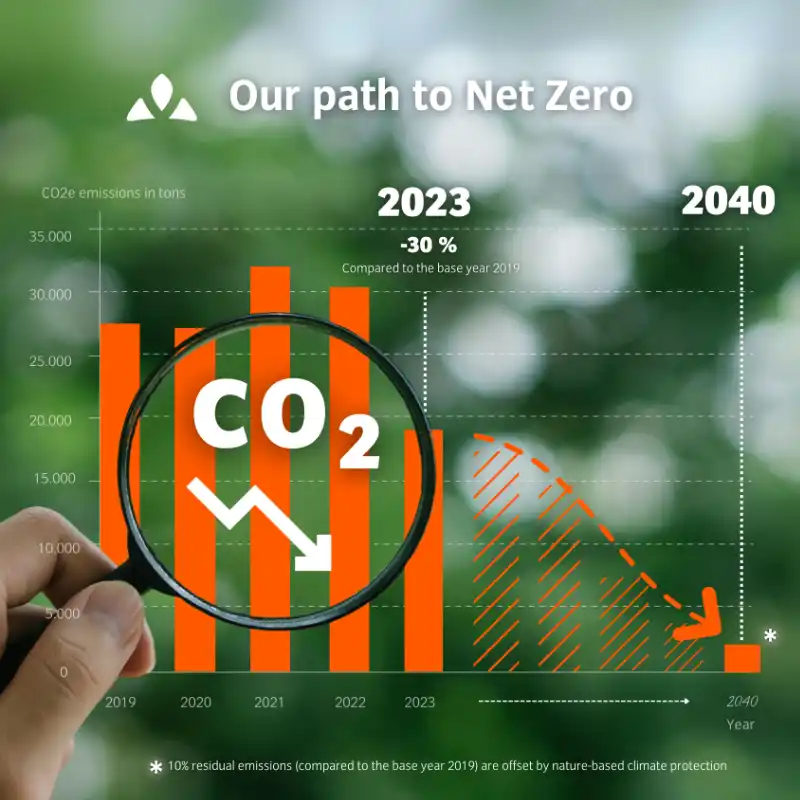
VAUDE will offset the remaining 10% of emissions, which it cannot avoid, with nature-based solutions such as restoring heathland, which stores CO2 in nature. These measures also bring other environmental benefits, such as protecting biodiversity and managing water.
Milestones Reached in CO2 Reduction
The latest sustainability report shows that VAUDE has already made significant progress. In 2023, the company cut its total emissions by 30% compared with 2019, while its sales grew by 32% over the same period. Key contributions to this cut are:
- 36% lower emissions in the vehicle fleet and heating.
- 100% green electricity at the German head office.
However, VAUDE’s biggest challenge lies in the supply chain, where most emissions arise. Even so, the company has made significant savings here too. It works with other brands to improve energy efficiency and speed up the switch to renewable energy.
Sustainable Products and Recycled Materials
One of the main ways VAUDE cuts emissions is by switching from fossil raw materials to recycled and renewable ones. In the 2023 summer collection, 75% of products were made from materials that are at least 50% recycled or renewable. VAUDE has set itself the ambitious goal that by 2030, 90% of all products will consist of at least 85% recycled or renewable materials.
Choosing sustainable materials not only shrinks the company’s ecological footprint. It also helps build a future where outdoor fans can enjoy their surroundings without needlessly harming them.
Working Together on the Energy Transition in the Supply Chain
Most of VAUDE’s emissions come from making materials in the supply chain. Therefore, since 2021, VAUDE has worked with other outdoor brands in the Carbon Reduction Project to help suppliers switch from coal to lower-emission energy sources. By working together on this energy transition, companies can cut their climate impact jointly.
In addition, VAUDE puts energy-efficiency measures in place, such as using dyeing machines with lower emissions, which allows further savings.
Time Is Running Out – VAUDE Net Zero 2040
Although VAUDE has achieved impressive results, Antje von Dewitz stresses that there is no time to lose: “Science shows that there is no alternative to Net Zero. We still have some room to manoeuvre, but time is running out. That is why it matters so much that many people start this journey and drive the necessary transformation. Together we can do it.”
With this determination, VAUDE remains a sustainability pioneer in the outdoor industry. The company keeps working to reduce its ecological footprint and shows that economic growth and environmental protection can go hand in hand.
VAUDE Net Zero 2040
VAUDE has set itself the goal of reaching net zero in 2040 and is already well on its way. It focuses strongly on cutting CO2 emissions, switching to recycled materials and working with other brands to speed up the energy transition. In this way, VAUDE shows that companies can play a crucial role in the fight against climate change.
With a clear vision of the future and science-based goals, VAUDE remains an example for other companies that strive for sustainability and climate protection.


